Early Warning Signs of Construction Quality Issues: How Civil Testing Helps Identify Problems Before Failure
Construction defects do not always appear as major structural failures. Many problems begin with small warning signs such as cracks, settlement, surface defects, poor drainage, or uneven ground conditions. These signs can indicate issues with soil, concrete, materials, compaction, drainage, or construction practices. If they are ignored, minor defects can develop into costly repairs, structural damage, or project delays.
Civil testing helps identify these problems by measuring soil properties, concrete strength, compaction, aggregates, and other construction materials. Testing provides technical information that helps project teams detect weaknesses early and take corrective action before they affect safety, durability, or project performance.
Civil testing helps identify these problems by measuring soil properties, concrete strength, compaction, aggregates, and other construction materials. Testing provides technical information that helps project teams detect weaknesses early and take corrective action before they affect safety, durability, or project performance.
What Are Early Warning Signs of Construction Quality Issues?
Early warning signs are visible or measurable changes that may indicate a construction quality problem.
Common signs include:
A warning sign does not always confirm structural failure. However, it should be investigated when its location, size, pattern, or progression suggests an underlying construction or material issue.
Common signs include:
- Cracks in concrete or masonry
- Uneven floors or surfaces
- Ground settlement
- Weak or poorly compacted soil
- Concrete surface deterioration
- Water accumulation around structures
- Unexpected movement or deformation
- Premature pavement damage
- Inconsistent material performance
A warning sign does not always confirm structural failure. However, it should be investigated when its location, size, pattern, or progression suggests an underlying construction or material issue.
Common Causes of Construction Quality Problems
Construction quality issues can originate from conditions below the finished surface as well as from construction activities.
Soil provides the foundation for roads, buildings, foundations, and other structures. Weak, expansive, organic, or poorly graded soil can affect bearing capacity and settlement.
Soil testing helps determine properties such as moisture content, particle size, density, and strength before construction decisions are made.
Inadequate compaction can leave voids and reduce soil stability. Later settlement may produce uneven surfaces, pavement damage, or foundation movement.
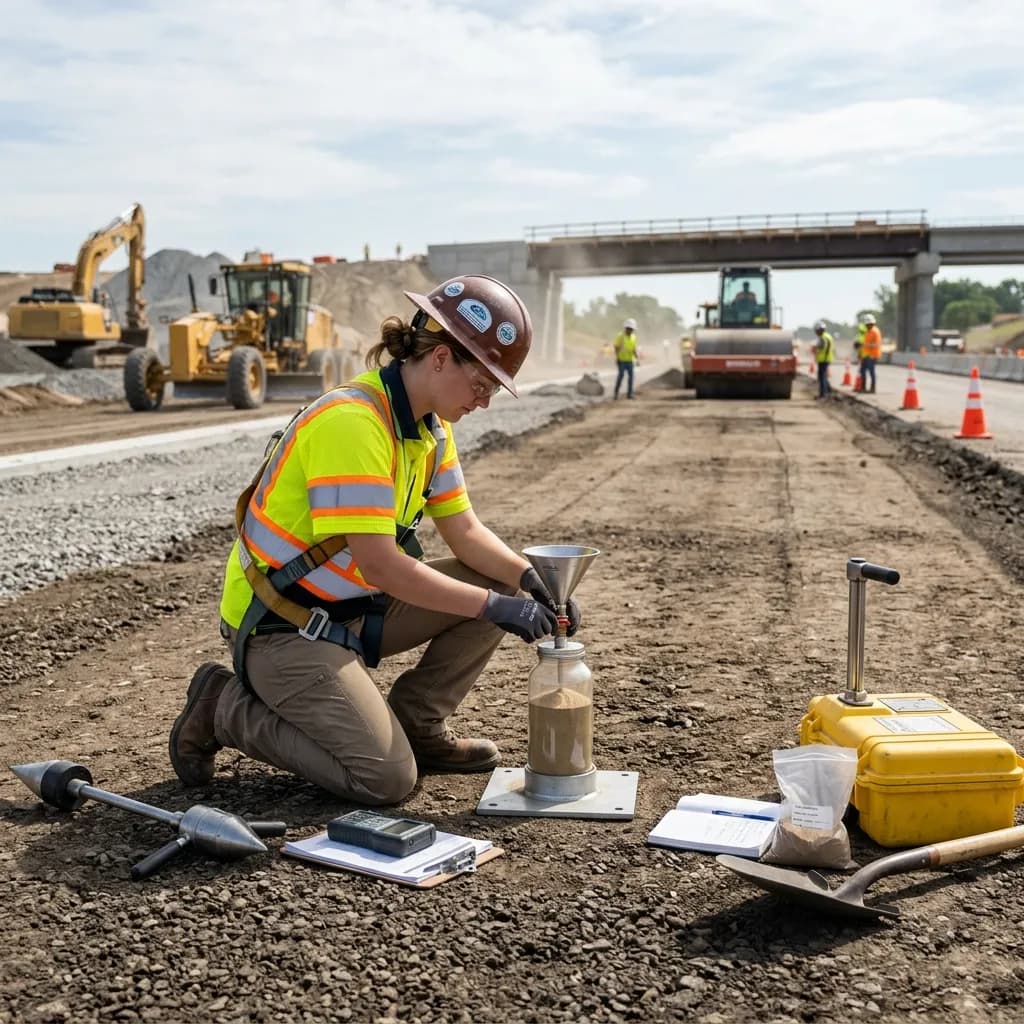
Field compaction testing helps verify whether placed soil has achieved the required density.
Concrete performance depends on factors such as mix proportions, water content, curing, material quality, and placement practices.
Low concrete strength can reduce structural performance and increase the risk of cracking or premature deterioration.
Water can weaken soil, increase erosion, damage pavement, and contribute to settlement. Persistent water accumulation around foundations or paved areas should therefore be investigated.
Incorrect material selection, improper installation, inadequate curing, and deviations from project specifications can affect construction quality even when the design itself is appropriate.
Weak or Unsuitable Soil
Soil provides the foundation for roads, buildings, foundations, and other structures. Weak, expansive, organic, or poorly graded soil can affect bearing capacity and settlement.
Soil testing helps determine properties such as moisture content, particle size, density, and strength before construction decisions are made.
Poor Compaction
Inadequate compaction can leave voids and reduce soil stability. Later settlement may produce uneven surfaces, pavement damage, or foundation movement.
Field compaction testing helps verify whether placed soil has achieved the required density.
Incorrect Concrete Properties
Concrete performance depends on factors such as mix proportions, water content, curing, material quality, and placement practices.
Low concrete strength can reduce structural performance and increase the risk of cracking or premature deterioration.
Poor Drainage
Water can weaken soil, increase erosion, damage pavement, and contribute to settlement. Persistent water accumulation around foundations or paved areas should therefore be investigated.
Material and Workmanship Problems
Incorrect material selection, improper installation, inadequate curing, and deviations from project specifications can affect construction quality even when the design itself is appropriate.
Early Warning Signs That Require Investigation
Cracks and Concrete Surface Defects
Cracks can result from shrinkage, settlement, temperature changes, loading, poor curing, or other factors. Their width, depth, location, and pattern provide useful information about the potential cause.
Surface defects such as honeycombing, scaling, or excessive voids can also indicate problems with concrete placement or quality.
Settlement and Ground Movement
Uneven settlement can appear as sloping floors, pavement depressions, foundation movement, or gaps around structural elements.
Where ground movement is suspected, soil and field testing can help determine whether soil conditions or compaction are contributing to the problem.
Poor Pavement Performance
Rutting, cracking, potholes, or uneven pavement can indicate problems with subgrade strength, drainage, compaction, aggregate quality, or construction practices.
Testing different pavement layers helps identify weaknesses before extensive deterioration occurs.
Water and Moisture Problems
Persistent moisture can affect soil strength and construction materials. Water around foundations, wet subgrades, or repeated surface ponding may indicate drainage or ground-condition problems.
How Civil Testing Identifies Construction Problems
Civil testing provides measurable information instead of relying only on visual inspection.
Soil tests help determine whether ground conditions are suitable for the intended construction. Depending on the project, testing may evaluate:
These results help engineers assess ground conditions and select appropriate construction methods.
Compaction testing verifies whether placed soil or fill has reached the required density.
Proper compaction improves stability and reduces the risk of excessive settlement. Field density results can therefore identify weak areas before subsequent construction layers are installed.
Concrete testing helps verify whether concrete achieves the required performance.
Common evaluations may include compressive strength, consistency, density, and other project-specific properties. Results can identify strength or quality concerns before they become significant structural problems.
Aggregates influence concrete, pavement, and other construction applications. Testing can evaluate properties such as grading, particle characteristics, and suitability for the specified application.
Using materials that meet project requirements supports consistent construction performance.
Soil Testing
Soil tests help determine whether ground conditions are suitable for the intended construction. Depending on the project, testing may evaluate:
- Moisture content
- Grain size and classification
- Density
- Bearing characteristics
- Soil strength
- Compaction properties
These results help engineers assess ground conditions and select appropriate construction methods.
Compaction Testing
Compaction testing verifies whether placed soil or fill has reached the required density.
Proper compaction improves stability and reduces the risk of excessive settlement. Field density results can therefore identify weak areas before subsequent construction layers are installed.
Concrete Testing
Concrete testing helps verify whether concrete achieves the required performance.
Common evaluations may include compressive strength, consistency, density, and other project-specific properties. Results can identify strength or quality concerns before they become significant structural problems.
Aggregate Testing
Aggregates influence concrete, pavement, and other construction applications. Testing can evaluate properties such as grading, particle characteristics, and suitability for the specified application.
Using materials that meet project requirements supports consistent construction performance.
How Civil Testing Helps Prevent Construction Failure
Civil testing is most valuable when test results are used for timely decisions.
Testing can help project teams:
Early testing also allows problems to be corrected before additional construction layers hide the affected area. Correcting a weak subgrade before pavement installation, for example, is generally more practical than repairing pavement after failure.
Testing can help project teams:
- Identify weak soil conditions
- Verify compaction quality
- Confirm material properties
- Detect concrete strength concerns
- Identify unsuitable construction materials
- Support corrective action
- Reduce rework and material waste
- Improve construction consistency
- Support project specifications
- Reduce the risk of premature failure
Early testing also allows problems to be corrected before additional construction layers hide the affected area. Correcting a weak subgrade before pavement installation, for example, is generally more practical than repairing pavement after failure.
When Should Civil Testing Be Conducted?
Testing should be planned throughout relevant construction stages rather than performed only after a defect appears.
Important stages may include:
The appropriate tests depend on the project design, materials, site conditions, specifications, and applicable standards.
Important stages may include:
- Before foundation construction
- During earthwork and filling
- During soil compaction
- Before and during concrete placement
- During road and pavement construction
- During material acceptance
- When unexpected defects appear
- Before corrective or rehabilitation work
The appropriate tests depend on the project design, materials, site conditions, specifications, and applicable standards.
Construction Areas Where Testing Is Important
Civil testing can support quality control across:
Testing requirements should always be established according to the specific project and engineering requirements.
- Building foundations
- Earthwork and site preparation
- Roads and pavements
- Concrete structures
- Industrial facilities
- Infrastructure projects
- Commercial developments
- Excavation and backfilling works
Testing requirements should always be established according to the specific project and engineering requirements.
Why Choose Prime Innovation for Construction Testing Support?
Prime Innovation supports construction and industrial projects with technical services and testing-related solutions designed to improve project reliability.
Its experience across industrial, infrastructure, and construction environments supports a practical approach to identifying material and site-related concerns.
For projects requiring civil testing, the testing scope should be established according to the applicable project specifications, required standards, and engineering requirements. This ensures that test results provide useful information for construction quality decisions rather than simply generating test reports.
Its experience across industrial, infrastructure, and construction environments supports a practical approach to identifying material and site-related concerns.
For projects requiring civil testing, the testing scope should be established according to the applicable project specifications, required standards, and engineering requirements. This ensures that test results provide useful information for construction quality decisions rather than simply generating test reports.
Identify Construction Problems Before They Become Failures
Construction quality issues rarely appear without warning. Cracks, settlement, poor compaction, concrete defects, pavement deterioration, and persistent moisture can indicate underlying problems with soil, materials, workmanship, or drainage. Ignoring these signs can lead to costly repairs, project delays, material waste, and premature failure.
Civil testing provides the measurable data needed to investigate these concerns before they become major defects. Soil, compaction, concrete, and aggregate testing can help identify weaknesses, verify material performance, and support timely corrective action. Instead of relying only on visible symptoms, testing helps project teams understand what is happening beneath the surface.
For construction and infrastructure projects, early testing is not simply a quality-control step. It is a practical way to reduce uncertainty, improve construction reliability, and prevent small problems from developing into expensive failures. With the right testing approach and technical support, potential quality issues can be identified earlier, addressed more effectively, and managed before they compromise project performance.
Civil testing provides the measurable data needed to investigate these concerns before they become major defects. Soil, compaction, concrete, and aggregate testing can help identify weaknesses, verify material performance, and support timely corrective action. Instead of relying only on visible symptoms, testing helps project teams understand what is happening beneath the surface.
For construction and infrastructure projects, early testing is not simply a quality-control step. It is a practical way to reduce uncertainty, improve construction reliability, and prevent small problems from developing into expensive failures. With the right testing approach and technical support, potential quality issues can be identified earlier, addressed more effectively, and managed before they compromise project performance.
Recent Blogs
Instrument Drift in Industrial Plants: Causes, Risks, and How Calibration Prevents Production Losses
September 16, 2026

Fixed vs Portable Gas Detectors: Which Is Right for Your Facility
August 12, 2026
The Importance of Reliable Industrial Material Suppliers for Project Success
August 10, 2026

How Choosing the Right Industrial Material Supplier Reduces Project Costs
July 17, 2026

How Pressure Gauge Calibration Improves Industrial Safety and Process Efficiency
July 13, 2026