Sandblasting: A Complete Guide to Industrial Surface Preparation and Protective Coating
Sandblasting is a widely used industrial surface preparation method that removes rust, scale, and contaminants before painting and coating. Proper abrasive selection, equipment setup, and surface inspection ensure optimal coating adhesion and long-term corrosion protection for critical industrial assets.
What Is Sandblasting?
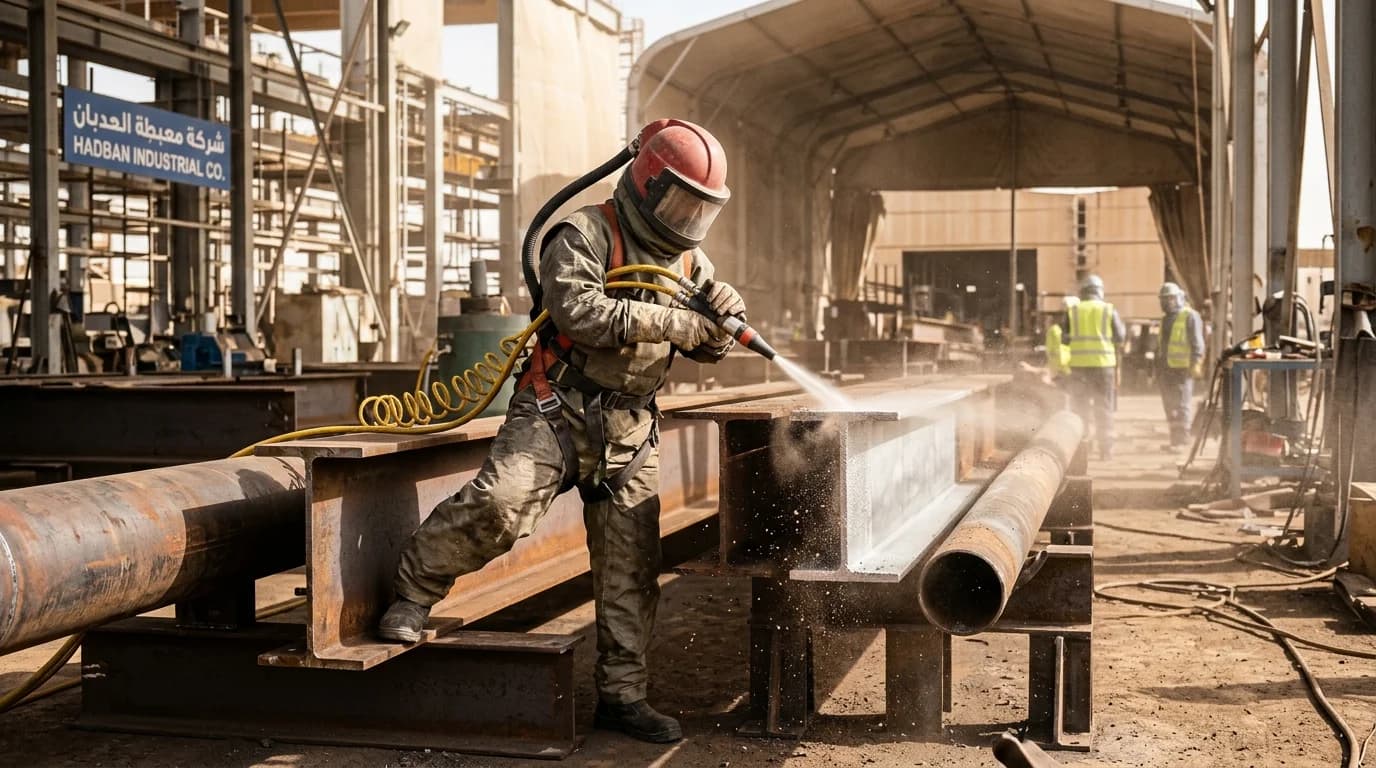
Sandblasting is a surface preparation method in which abrasive particles are propelled at high speed towards a material to clean or modify its surface. The impact of these particles helps remove rust, old paint, mill scale and other unwanted deposits. It can also produce a surface profile, which refers to the pattern of small peaks and valleys created on the material.
Although the method is commonly called sandblasting, industrial applications do not always use ordinary sand. Different abrasive materials are selected according to the surface being treated, the required cleanliness, the desired surface profile and the coating specification. The broader technical term for this method is abrasive blasting.
The process is commonly used on steel structures, industrial pipes, storage tanks, valves, machinery and fabricated metal components. It helps prepare these surfaces for painting, coating, maintenance or further treatment.
The blasting method and abrasive media should be selected according to the project requirements. For example, removing heavy rust from a steel component may require a different approach from cleaning a surface that only has a thin layer of old paint or loose contamination.
Why Is Surface Preparation Important Before Industrial Painting?
Surface preparation is an important stage in industrial painting and protective coating work. A coating needs a suitably clean and prepared surface to perform as intended. When rust, grease, dust or loose paint remains underneath, the coating may not bond properly to the material.
Even when an appropriate coating system is selected, poor preparation can contribute to problems such as peeling, blistering, uneven coverage and premature deterioration. The preparation method therefore needs to match the condition of the surface and the requirements of the coating system.
Proper surface preparation helps to:
The required level of cleanliness and surface profile is not identical for every project. It depends on the substrate, existing surface condition, coating system and project specification. AMPP's surface preparation committee provides technical information about industry standards covering abrasive media, surface cleanliness, non-visible contaminants and surface profile evaluation. These resources can help readers understand the technical considerations involved in preparing surfaces for protective coatings.
Even when an appropriate coating system is selected, poor preparation can contribute to problems such as peeling, blistering, uneven coverage and premature deterioration. The preparation method therefore needs to match the condition of the surface and the requirements of the coating system.
Proper surface preparation helps to:
- Remove existing contaminants: Rust, mill scale, old paint, grease and loose particles can interfere with coating application. Removing these materials helps create a cleaner base for the next stage.
- Improve coating adhesion: Suitable surface preparation creates conditions that allow the coating to bond more effectively with the substrate. The required surface profile depends on the coating manufacturer's recommendations.
- Support corrosion protection: Removing existing corrosion and preparing the material helps protective coatings form a barrier against moisture and other environmental exposure.
- Improve coating consistency: A properly prepared surface makes it easier to achieve consistent coverage and carry out coating inspections.
- Reduce preparation-related defects: Identifying and addressing surface problems before painting can help avoid issues that may require additional cleaning, repair or recoating.
The required level of cleanliness and surface profile is not identical for every project. It depends on the substrate, existing surface condition, coating system and project specification. AMPP's surface preparation committee provides technical information about industry standards covering abrasive media, surface cleanliness, non-visible contaminants and surface profile evaluation. These resources can help readers understand the technical considerations involved in preparing surfaces for protective coatings.
How Does the Sandblasting Process Work?
The sandblasting process involves several stages, starting with the assessment of the material and ending with an inspection of the prepared surface. Each stage helps ensure that the surface is suitable for the intended coating application.
The inspection also helps determine the preparation method and the level of cleaning required. For example, a heavily corroded steel pipe may need a different preparation approach from a recently manufactured component with limited surface contamination.
The selection should also consider the required surface profile, possible contamination from the abrasive and the compatibility of the preparation method with the coating specification. Using unsuitable media may produce a surface that does not meet the project's requirements.
During operation, the blasting pattern, nozzle distance and working angle are controlled according to the equipment instructions and project requirements. Proper control helps achieve more consistent surface cleaning while avoiding unnecessary damage to the material.
The prepared material should be protected from additional contamination while it is being transferred to the inspection and coating stages.
If the surface does not meet the required conditions, additional preparation or cleaning may be necessary. Once the inspection requirements are satisfied, the material can proceed to primer or protective coating application.
1. Initial Surface Inspection
Before blasting begins, the material is examined to identify its existing condition. This may involve checking for rust, mill scale, old coatings, grease, dust, loose deposits and visible surface damage.The inspection also helps determine the preparation method and the level of cleaning required. For example, a heavily corroded steel pipe may need a different preparation approach from a recently manufactured component with limited surface contamination.
2. Selection of Abrasive Media
The appropriate abrasive is selected based on the material being treated, the condition of the surface and the required finish. Different abrasives have different levels of hardness, particle shapes and cleaning characteristics.The selection should also consider the required surface profile, possible contamination from the abrasive and the compatibility of the preparation method with the coating specification. Using unsuitable media may produce a surface that does not meet the project's requirements.
3. Equipment Setup and Blasting
Once the media has been selected, the blasting equipment is prepared. In conventional compressed-air blasting, the abrasive is transferred through a hose and directed towards the surface through a nozzle.During operation, the blasting pattern, nozzle distance and working angle are controlled according to the equipment instructions and project requirements. Proper control helps achieve more consistent surface cleaning while avoiding unnecessary damage to the material.
4. Cleaning After Blasting
After the blasting operation, residual abrasive particles, dust and loose deposits must be removed using suitable cleaning methods. This is important because remaining contaminants can interfere with coating adhesion and affect the final surface finish.The prepared material should be protected from additional contamination while it is being transferred to the inspection and coating stages.
5. Surface Inspection Before Coating
The surface is checked to confirm that it meets the specified cleanliness and profile requirements. Inspectors may also check for remaining dust, visible contamination, rust and surface imperfections.If the surface does not meet the required conditions, additional preparation or cleaning may be necessary. Once the inspection requirements are satisfied, the material can proceed to primer or protective coating application.
Types of Abrasive Media Used in Sandblasting
Different abrasive materials are used for industrial surface preparation. Their properties influence the cleaning process, surface finish and suitability for particular applications.
The selection depends on factors such as substrate material, existing coating condition, required surface profile, operating environment, equipment compatibility and project specification.
Some commonly used abrasive materials include:
No single abrasive is suitable for every project. The material should be selected based on the required surface condition rather than cost or availability alone.
The selection depends on factors such as substrate material, existing coating condition, required surface profile, operating environment, equipment compatibility and project specification.
Some commonly used abrasive materials include:
- Garnet: A naturally occurring mineral abrasive with angular particles. It is used for various surface cleaning and preparation applications, depending on its grade and the required finish.
- Steel grit: An angular metallic abrasive commonly used for removing rust, mill scale and existing coatings from suitable metal surfaces. Its characteristics make it relevant for certain heavy-duty preparation requirements.
- Steel shot: A rounded metallic abrasive used in applications where its impact and surface treatment characteristics are appropriate. It is also commonly associated with cleaning and surface treatment of suitable metal components.
- Aluminium oxide: A hard abrasive used for cleaning and surface preparation where a more aggressive abrasive action is required.
- Glass beads: A non-metallic media option used for selected cleaning and finishing applications where a less aggressive treatment is preferred.
No single abrasive is suitable for every project. The material should be selected based on the required surface condition rather than cost or availability alone.
What Is Garnet Used for in Sandblasting?
Garnet is a mineral abrasive used in several industrial surface preparation applications. It has an angular grain structure, and different grades are available for different blasting requirements. Its properties make it a suitable option for certain metal cleaning and coating preparation tasks.
When selecting sandblasting garnet, project teams should consider:
The selection of garnet should be based on the application and safety assessment. It should not be assumed to be suitable for every material or working environment.
When selecting sandblasting garnet, project teams should consider:
- Particle size and grade: The selected grade influences the blasting characteristics and the resulting surface profile.
- Surface material: The abrasive should be appropriate for the substrate being prepared.
- Required cleanliness: The media must be suitable for achieving the cleaning level stated in the project specification.
- Surface profile: The resulting profile should match the requirements of the protective coating system.
- Abrasive condition: Contaminated or unsuitable media can affect the quality of surface preparation.
- Safety and waste management: Dust generation, exposure controls and disposal requirements should be considered before use.
The selection of garnet should be based on the application and safety assessment. It should not be assumed to be suitable for every material or working environment.
Essential Sandblasting Equipment
Sandblasting requires equipment that delivers abrasive media in a controlled manner. The setup may vary depending on the blasting method, size of the component and conditions at the worksite.
The main equipment and components generally include:
Regular equipment checks and servicing should follow the maintenance guidelines provided by the equipment manufacturer. Worn hoses, damaged connections, blocked nozzles or unsuitable air supply conditions can affect blasting operations and create safety risks.
The main equipment and components generally include:
- Air compressor: Supplies the compressed air required for pneumatic blasting. Its capacity should be appropriate for the blasting equipment and nozzle requirements.
- Blast pot: Stores the abrasive and regulates its delivery into the blasting line.
- Blast hose and nozzle: Carry the abrasive towards the work surface and direct the blasting stream. Nozzle condition and selection can influence the consistency of the process.
- Moisture and oil control equipment: Helps prevent water or oil contamination from the compressed air supply from reaching the blasting surface.
- Dust collection and containment systems: Help manage dust, spent abrasive and removed coating materials. Suitable containment is particularly important when blasting is carried out in enclosed or populated industrial areas.
- Personal protective equipment: Includes appropriate blasting protection, respiratory protection, eye protection and hearing protection based on the hazards identified during the risk assessment.
Regular equipment checks and servicing should follow the maintenance guidelines provided by the equipment manufacturer. Worn hoses, damaged connections, blocked nozzles or unsuitable air supply conditions can affect blasting operations and create safety risks.
Surface Inspection After Sandblasting
Completing the blasting operation does not automatically mean that the surface is ready for painting. The prepared material needs to be inspected to confirm that it meets the requirements of the project and the selected coating system.
Three important areas should receive attention:
Inspection methods depend on the project specification. They may include visual assessment, suitable surface profile measurement methods and checks for surface dust or non-visible contaminants such as soluble salts.
The surface should also be protected from weather and other sources of contamination between blasting and painting. This helps maintain the prepared condition until the coating can be applied.
Three important areas should receive attention:
- Surface cleanliness: The material should be checked for remaining rust, old coating, mill scale, dust and other contaminants. The required cleanliness level should follow the specified preparation standard rather than a general visual assumption.
- Surface profile: The surface profile refers to the roughness created during blasting. A suitable profile provides the texture required for the coating system to bond to the substrate. If the profile is outside the specified range, the coating may not perform as expected.
- Remaining contamination and flash rust: Dust, abrasive residues, oil and moisture can affect the prepared surface. Flash rust may also develop when freshly blasted metal is exposed to moisture. These conditions should be identified and addressed before coating application.
Inspection methods depend on the project specification. They may include visual assessment, suitable surface profile measurement methods and checks for surface dust or non-visible contaminants such as soluble salts.
The surface should also be protected from weather and other sources of contamination between blasting and painting. This helps maintain the prepared condition until the coating can be applied.
Industrial Protective Coating: What Happens After Surface Preparation?
After sandblasting and surface inspection are complete, the prepared material can move to the protective coating stage. Industrial protective coating involves applying a suitable coating system to help protect surfaces from corrosion, moisture, chemicals, abrasion and other environmental conditions.
The coating system should be selected according to the substrate, operating environment, expected exposure and project requirements. A coating intended for an outdoor steel structure, for example, may have different requirements from one used on equipment exposed to chemicals or industrial process conditions.
Common industrial coating materials include:
A protective coating system may contain multiple layers, depending on the project requirements:
Not every project requires all three layers. The coating manufacturer's product data and approved project specification should determine the number of coats, materials, application method and curing requirements.
The coating system should be selected according to the substrate, operating environment, expected exposure and project requirements. A coating intended for an outdoor steel structure, for example, may have different requirements from one used on equipment exposed to chemicals or industrial process conditions.
Common industrial coating materials include:
- Epoxy coatings: Often used to provide a protective barrier and resistance to moisture and certain chemicals. They are commonly included in protective coating systems for industrial metal surfaces.
- Polyurethane coatings: Used in applications where properties such as weathering resistance, finish and UV performance are important. They are often selected as topcoats in suitable coating systems.
- Zinc-rich coatings: Contain zinc particles and can provide corrosion protection through sacrificial action when correctly specified and applied.
A protective coating system may contain multiple layers, depending on the project requirements:
- Primer: The primer is generally the first coat applied to the prepared surface. It helps establish the coating system and provides the required foundation for subsequent layers.
- Intermediate coat: Where specified, an intermediate layer adds protective film thickness and helps build the required coating system.
- Topcoat: The final layer provides the specified finish and additional protection against environmental exposure. Its formulation depends on the intended service conditions.
Not every project requires all three layers. The coating manufacturer's product data and approved project specification should determine the number of coats, materials, application method and curing requirements.
How Sandblasting Supports Protective Coating Performance
Sandblasting and protective coating are connected stages of industrial surface protection. Blasting prepares the material by removing unwanted deposits and creating the required surface condition, while the coating provides a protective layer against the surrounding environment.
Their relationship can be understood through three important factors:
The coating system must also be compatible with the material and intended operating environment. Proper sandblasting cannot compensate for unsuitable coating selection, incorrect application or inadequate curing.
Their relationship can be understood through three important factors:
1. Surface Cleanliness
Removing rust, old coatings, mill scale and other contaminants helps prevent unwanted materials from remaining beneath the coating. This is important because contamination at the interface between the substrate and coating can contribute to adhesion problems and coating defects.2. Surface Profile and Adhesion
The prepared surface needs a profile appropriate for the selected coating. A suitable profile provides the texture needed for coating adhesion. However, a profile that is too shallow may not meet the coating requirements, while an excessively rough profile can make it difficult to achieve adequate coverage over surface peaks.3. Timing and Environmental Conditions
Prepared metal surfaces can become contaminated or develop flash rust when exposed to moisture. The time between blasting and coating should therefore be managed according to the project specification and environmental conditions. Temperature, relative humidity and surface temperature may all influence whether the coating can be applied correctly.The coating system must also be compatible with the material and intended operating environment. Proper sandblasting cannot compensate for unsuitable coating selection, incorrect application or inadequate curing.
Important Factors to Consider Before Sandblasting and Coating
Before starting an industrial surface preparation project, several practical and technical factors need to be considered. Addressing them early can help avoid unnecessary rework and improve coordination between blasting, inspection and coating stages:
Following these considerations helps maintain better control over the complete surface preparation and coating process.
- Surface material and condition: Steel and other materials may require different preparation approaches. The existing level of corrosion, coating deterioration and contamination should be assessed first.
- Abrasive selection: Choose a suitable abrasive based on the substrate, required cleanliness, surface profile and coating specification.
- Project specifications: Confirm the required preparation level, applicable standards, coating materials, application requirements and inspection criteria before work begins.
- Environmental conditions: Temperature, relative humidity, surface temperature and moisture can affect blasting and coating operations. Conditions should be checked against the coating manufacturer's recommendations.
- Worker safety: Assess dust, noise, existing coating residues and abrasive-related hazards. Appropriate containment, ventilation, exposure controls and protective equipment are important. OSHA's guidance on protecting workers from abrasive blasting hazards explains why both the blasting media and the material being treated need to be considered.
- Inspection requirements: Determine when surface cleanliness, surface profile and coating thickness need to be checked. Agreeing on these requirements before work starts can make quality checks more consistent.
- Work sequencing: Plan the stages from initial cleaning and blasting to inspection, primer application, subsequent coats and final checks. This helps prevent delays and reduces the time the prepared surface remains exposed.
Following these considerations helps maintain better control over the complete surface preparation and coating process.
Industrial Sandblasting and Protective Coating Services by Prime Innovation
Industrial surface protection requires the right combination of surface cleaning, abrasive selection, coating application and inspection. Prime Innovation provides sandblasting and painting services in Saudi Arabia for industrial components such as steel structures, tanks, pipes, valves and equipment.
The company's published service process includes component assessment, cleaning and pre-treatment, sandblasting, primer and coating application, curing, Dry Film Thickness (DFT) verification, labelling and final inspection. Its service information also describes support for surface profile checks, visual inspection, coating verification and client inspection requirements.
For projects involving multiple industrial components, coordinating the preparation, coating and inspection stages is important for maintaining an organised workflow. The appropriate coating system and preparation requirements should be considered according to the component, project scope and environmental exposure.
Learn more about Prime Innovation's industrial sandblasting and painting services.
Conclusion
Sandblasting is an important method of preparing industrial surfaces before protective coating. By removing rust, old coatings, mill scale and other contaminants, it helps create a suitable surface for subsequent treatment.
However, effective surface protection involves more than blasting alone. Abrasive selection, equipment condition, surface cleanliness, profile inspection, coating compatibility and proper application all contribute to the overall process.
Treating surface preparation and protective coating as connected stages helps industries maintain better control over their surface protection work and address potential problems before they affect the finished coating.
Planning an industrial sandblasting or protective coating project? Contact Prime Innovation to discuss your component requirements, preparation scope and coating needs.
Recent Blogs

Benefits of Digital Calibration Certificates for Industrial Traceability
October 29, 2026

How Automatic Fire Suppression Systems Help Protect Industrial Electrical Cabinets
October 27, 2026
Early Warning Signs of Construction Quality Issues: How Civil Testing Helps Identify Problems Before Failure
September 16, 2026
Instrument Drift in Industrial Plants: Causes, Risks, and How Calibration Prevents Production Losses
September 16, 2026

Fixed vs Portable Gas Detectors: Which Is Right for Your Facility
August 12, 2026