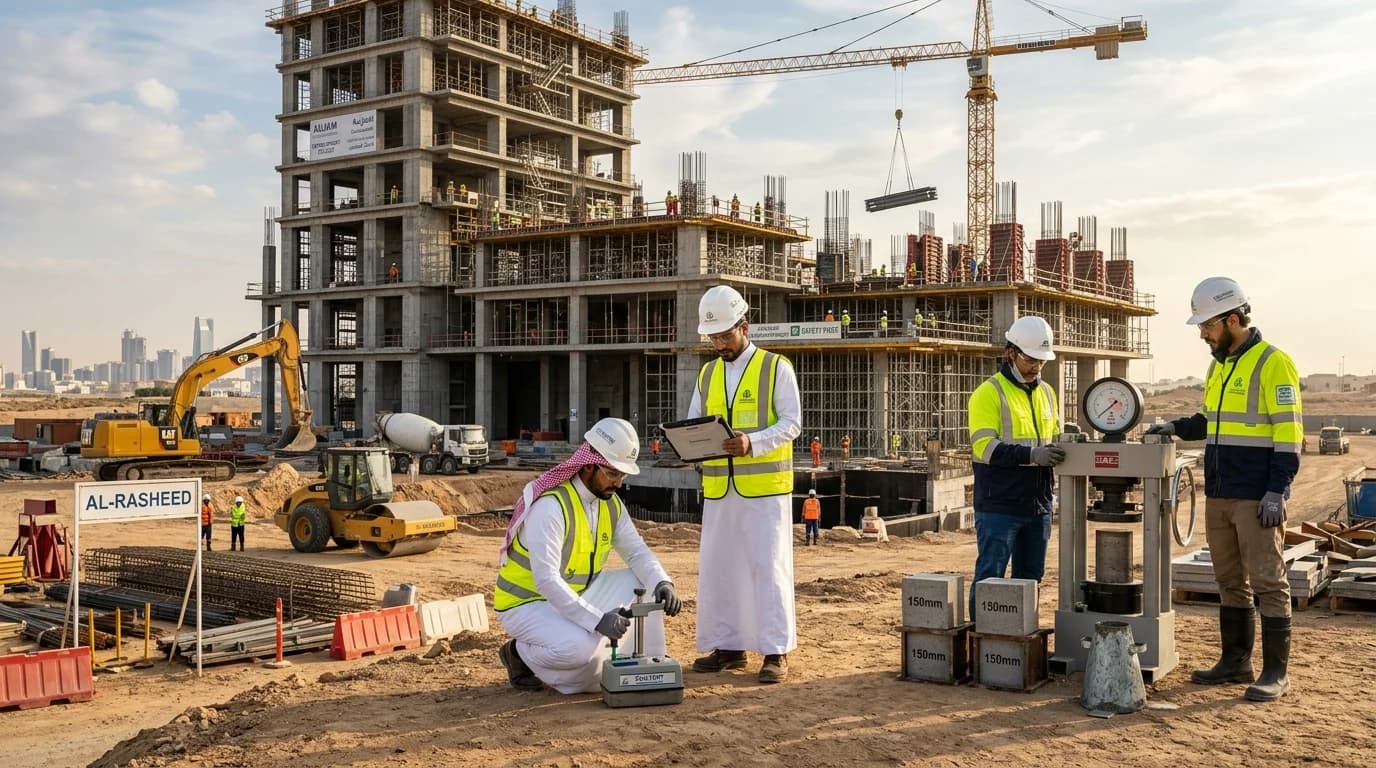
Civil Testing Services in Aujam, Saudi Arabia
Prime Innovation provides professional civil testing services for construction and infrastructure projects in Aujam, Saudi Arabia. From soil analysis and concrete testing to field density and aggregate evaluation, we deliver accurate material verification and quality control to support informed engineering decisions.
Comprehensive Civil Testing Services in Aujam
Construction quality depends on reliable materials, suitable ground conditions, and consistent quality control throughout the project lifecycle. From preparing a site for construction to evaluating concrete strength, civil testing provides valuable information that helps engineers and contractors assess whether materials and construction activities meet specified requirements.
Different stages of construction require different types of testing. Soil testing helps evaluate ground conditions, concrete testing assesses fresh and hardened concrete, and construction material testing examines whether selected materials meet project requirements.
Prime Innovation supports civil testing requirements for suitable building, commercial, industrial, and infrastructure projects in Aujam. The specific tests depend on the materials involved, the intended application, and the relevant project specifications.
Soil Testing Services
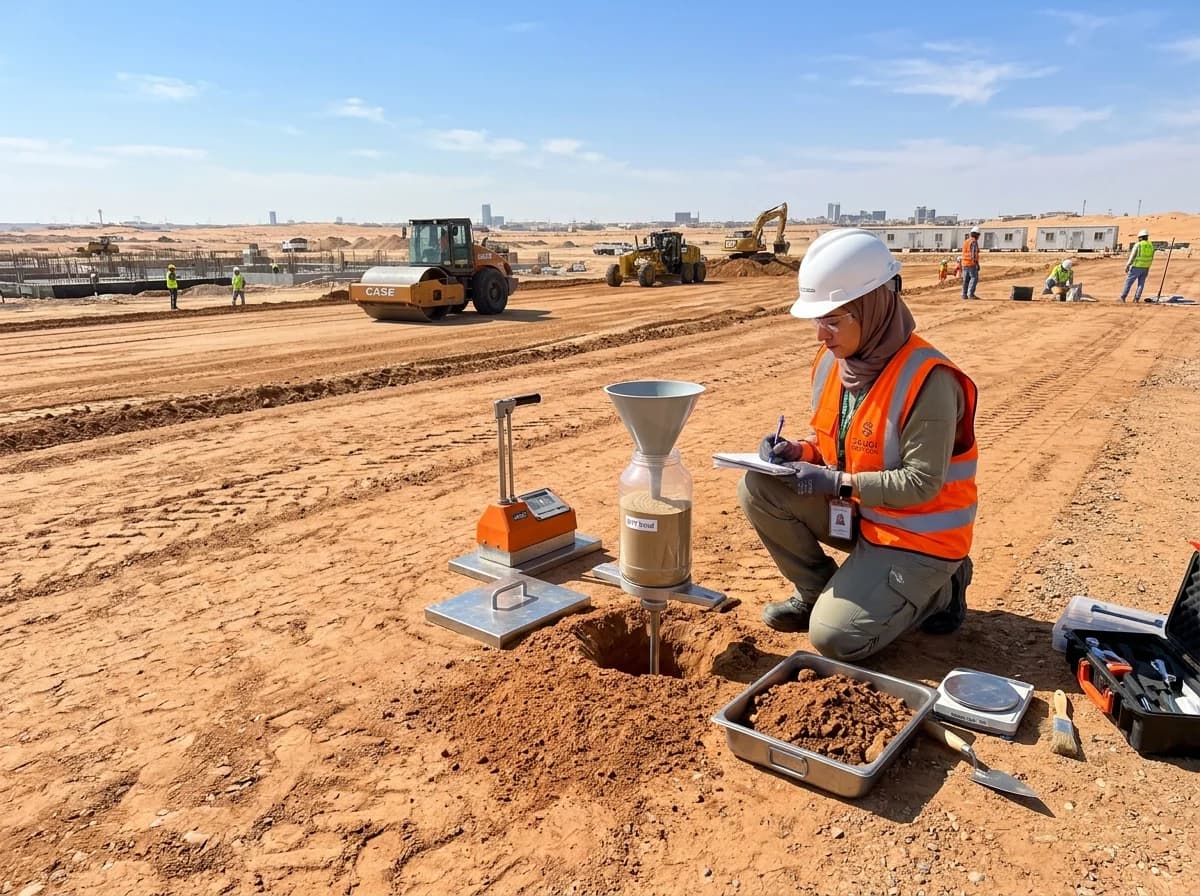
Soil conditions influence foundation design, earthworks, pavement construction, and the overall suitability of a site for development. Testing provides information about soil characteristics and helps engineers evaluate whether the material is appropriate for its intended purpose.
Depending on project requirements, soil testing may include moisture content, soil classification, particle-size distribution, Atterberg limits, compaction characteristics, and California Bearing Ratio (CBR) testing.
These assessments help construction teams understand soil behaviour, evaluate earthwork materials, and support decisions relating to foundations, backfilling, and subgrade preparation.
Concrete Testing Services
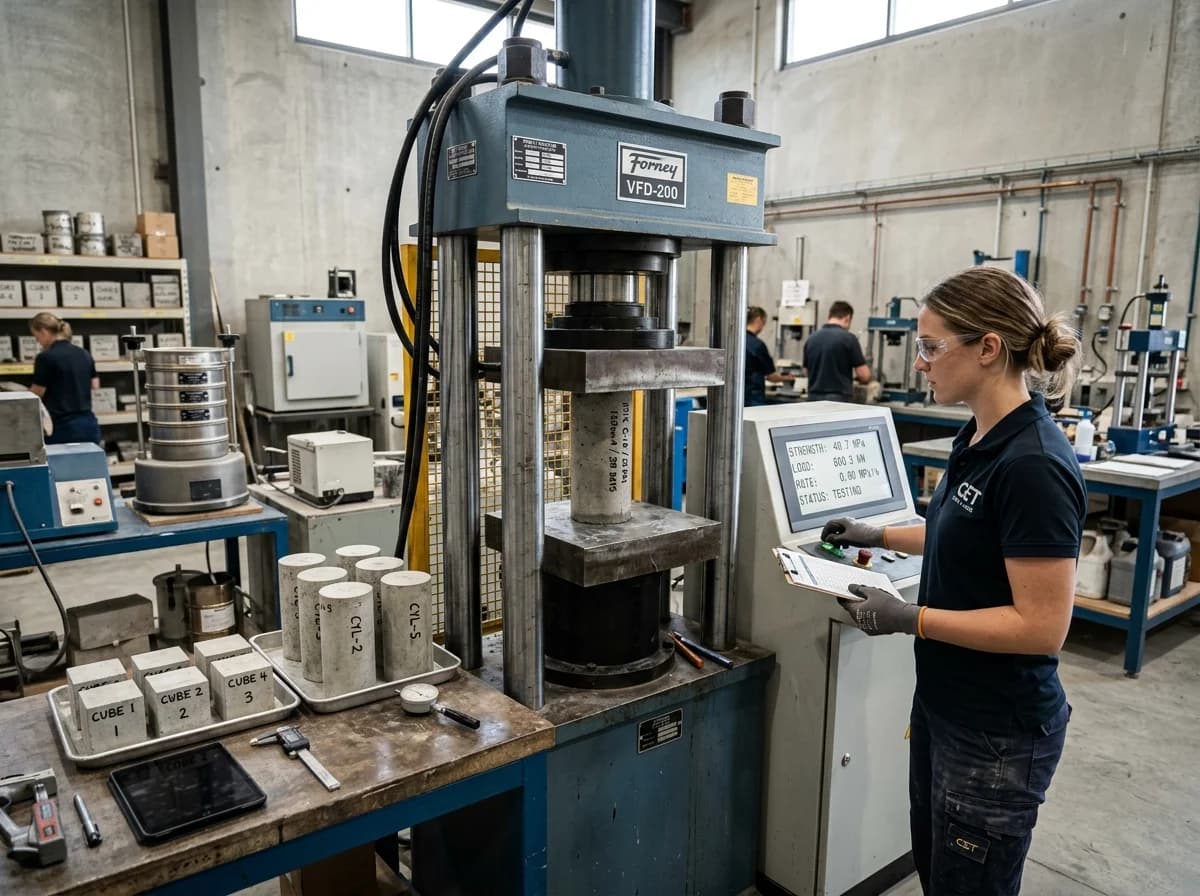
Concrete is widely used in foundations, columns, beams, slabs, retaining walls, and other structural elements. Testing helps evaluate its consistency, strength, and relevant performance characteristics against project specifications.
Concrete testing may include slump testing, concrete sampling, cube or cylinder specimen preparation, compressive strength testing, and selected density or absorption tests, depending on the required scope.
Fresh concrete tests provide information about properties during placement, while hardened concrete tests help determine whether the tested specimens achieve the specified strength. These results support construction quality control and engineering evaluation.
Field Density and Compaction Testing
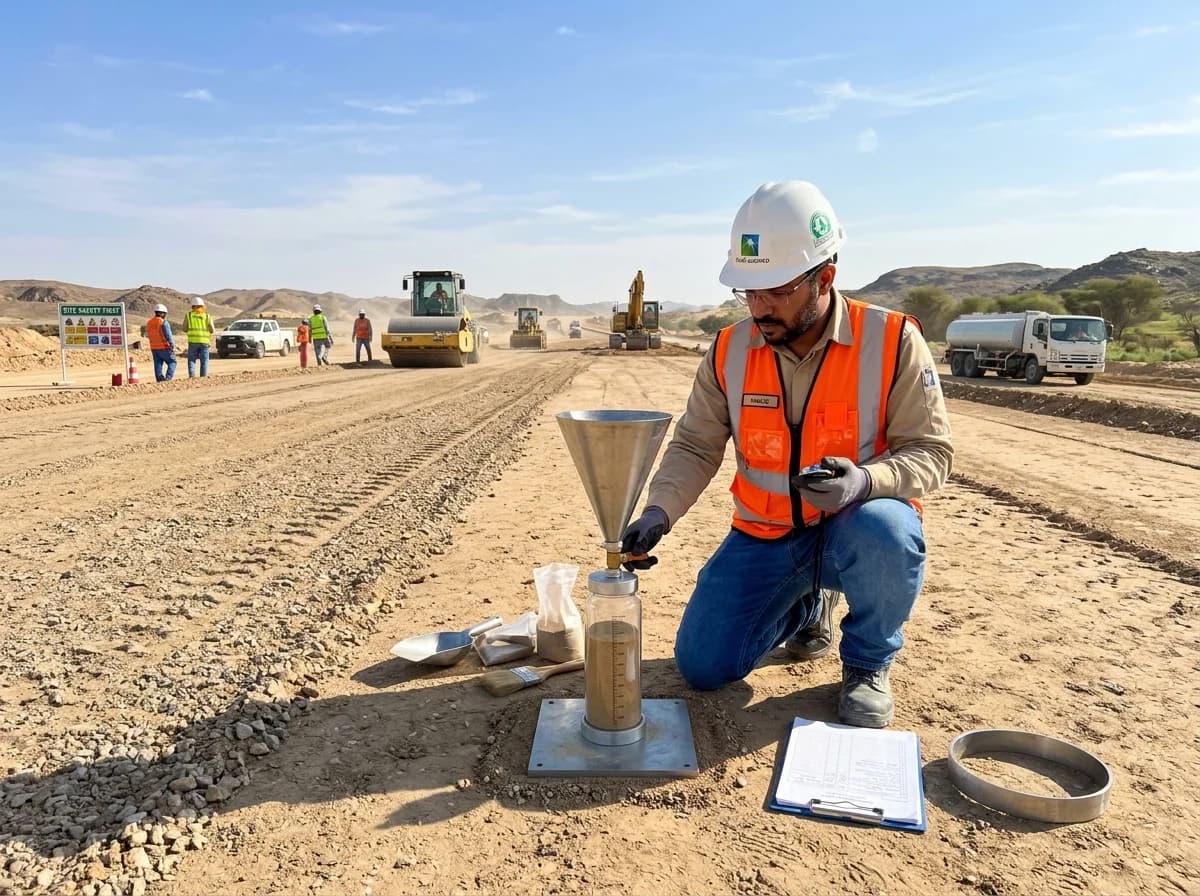
Proper compaction is important for earthworks, backfilling, road subgrades, and prepared construction layers. Inadequate compaction can contribute to settlement and affect the performance of the completed work.
Field density testing helps assess the in-place density of soil or fill material. When considered alongside the relevant laboratory compaction results, it allows project teams to evaluate whether the required compaction criteria have been achieved.
Testing requirements depend on the material type, project specifications, and applicable procedures.
Aggregate and Construction Material Testing
Aggregates and other construction materials influence the performance of concrete, road layers, and various civil engineering applications. Their properties should be evaluated according to the intended use and specified acceptance criteria.
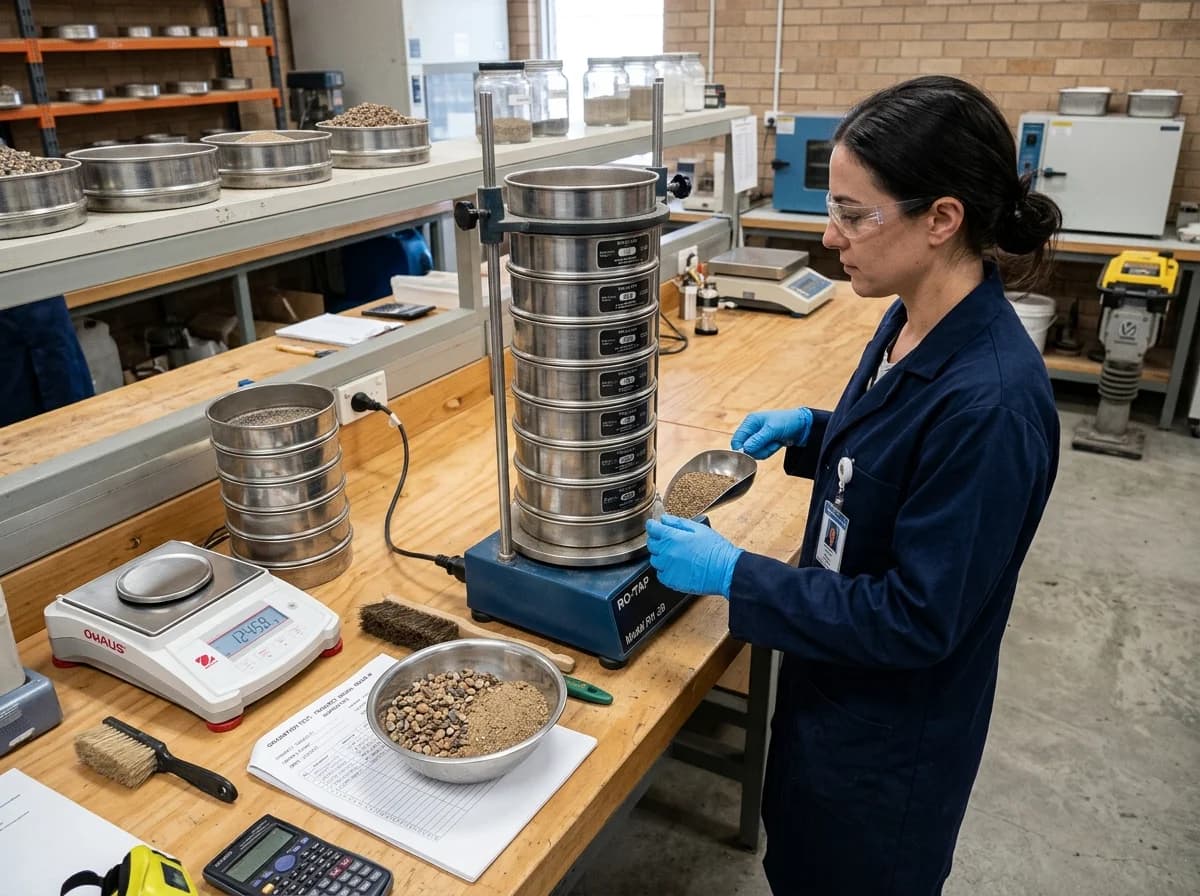
Depending on the agreed scope, aggregate testing may include sieve analysis, moisture content, specific gravity, water absorption, and other relevant physical tests.
Construction material testing helps contractors and consultants evaluate material suitability, identify variations, and maintain documented quality-control procedures.
Why Civil Testing Is Important for Construction Projects
Civil testing provides measurable information that supports construction decisions throughout the project. Visual inspection alone cannot establish every important property of soil, concrete, aggregates, or other building materials.
Appropriate testing can help project teams evaluate material quality, identify potential inconsistencies, verify specified requirements, and determine whether further investigation is necessary.
For contractors, developers, and engineering consultants working in Aujam, reliable test results can contribute to better quality management, improved coordination, and more informed decisions during construction.
Testing does not replace engineering assessment or site supervision. Instead, it provides technical evidence that can be considered alongside drawings, specifications, inspections, and other project information.
Civil Testing Support for Different Industries
Civil testing requirements vary according to the type and scale of the project. Prime Innovation supports testing requirements for suitable construction and engineering applications, subject to the agreed service scope.
Building and Commercial Developments
Residential, commercial, and other building projects may require soil evaluation, concrete strength testing, and construction material assessments at different stages. These tests help project teams review material performance against the specified requirements.
Infrastructure and Road Construction
Roads, access routes, utility works, and related infrastructure projects may require soil classification, compaction verification, aggregate testing, and other relevant material assessments. Testing helps evaluate the materials used in prepared layers and construction activities.
Industrial and Engineering Projects
Industrial facilities and engineering developments may involve foundations, concrete structures, earthworks, and supporting infrastructure. Civil testing helps assess selected construction materials and provides information for project quality-control procedures.
The tests required for each project should be identified according to its technical specifications and acceptance criteria.
Our Approach to Civil Testing
An effective testing process begins with a clear understanding of the project requirements. The required tests, sample types, testing locations, and reporting needs should be identified before work proceeds.
Review of Project Requirements
The project scope, material types, technical specifications, and required tests are reviewed to establish the testing requirements.
Sampling and Test Planning
Where included in the agreed scope, sampling and field testing activities are planned according to the material, location, and applicable testing procedures.
Laboratory or Field Evaluation
Samples or in-place materials are evaluated using the relevant test methods. The selected procedures depend on the material being assessed and the project requirements.
Review of Test Results
The results provide information about the measured properties of the tested material. They can then be compared with the relevant project specifications or acceptance criteria.
Reporting and Documentation
Test results are documented to support project records, quality-control reviews, and engineering decisions. Reporting requirements and turnaround times should be confirmed for each project.
Why Choose Prime Innovation for Civil Testing Services in Aujam?
Selecting civil testing support requires a clear understanding of the project requirements, appropriate test selection, and reliable documentation.
Prime Innovation supports contractors, consultants, engineers, developers, and project owners with civil testing requirements for suitable construction and infrastructure applications.
Project-Specific Testing Requirements
Testing needs are considered according to the material, intended application, technical specifications, and project scope.
Support for Construction Quality Control
Civil testing provides measurable information that helps project teams evaluate material properties and review compliance with specified requirements.
Soil, Concrete, and Material Evaluation
Depending on the agreed scope, testing may cover soil, concrete, aggregates, field density, compaction, and other construction materials.
Technical Documentation
Documented results help project stakeholders review findings, maintain records, and make informed decisions during construction.
The availability of individual tests, laboratory facilities, accreditation, and on-site services should be confirmed before the project is scheduled.
Request Civil Testing Services in Aujam, Saudi Arabia
Reliable testing is an important part of construction quality assurance. Whether your project requires soil evaluation, concrete compressive strength testing, field density testing, aggregate assessment, or other construction material testing, identifying the correct tests helps establish a clear quality-control process.
Prime Innovation supports civil testing requirements for construction and engineering projects in Aujam, Saudi Arabia. Share your project details, required tests, technical specifications, sample information, or BOQ so the team can review your requirements and discuss a suitable testing scope.
Frequently Asked Questions
Prime Innovation supports civil testing requirements for construction and infrastructure projects, potentially including soil testing, concrete testing, field density testing, compaction evaluation, aggregate testing, and construction material assessment. The specific tests available depend on the project requirements and confirmed service scope.
Get In Touch
