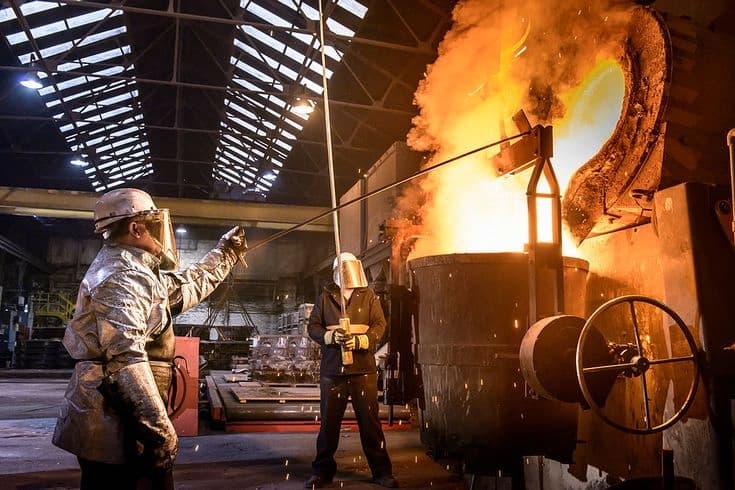
Refractory Testing Companies in Aziziyah
Refractory testing companies in Aziziyah provide specialized testing services to verify material performance under high-temperature operating conditions for industries such as oil and gas, power generation, and manufacturing. Testing is performed using validated methods, calibrated equipment, and ISO/IEC 17025-aligned procedures to ensure accurate, reliable, and compliant results. Laboratory and on-site refractory testing helps confirm material performance, equipment reliability, and regulatory compliance across Saudi Arabia.
Scope of Refractory Testing in Aziziyah
Refractory testing in Aziziyah covers physical, thermal, and chemical evaluations required for furnaces, kilns, boilers, reactors, incinerators, and lining systems. Test validity depends on controlled sample preparation, method selection, and environmental stability during measurement.
All test results must be supported by calibrated instrumentation and documented measurement uncertainty. Without these controls, test data cannot be reliably used for design verification, supplier approval, or audit submission.

Laboratory Quality System Alignment
Testing laboratories operating in Riyadh are expected to maintain quality systems aligned with ISO/IEC 17025 and national requirements issued by Saudi Standards, Metrology and Quality Organization. Accreditation oversight is provided by Saudi Accreditation Center, ensuring that refractory test results are technically valid and traceable to recognized standards.
Calibration and Measurement Control
Calibration of Refractory Testing Equipment
Accurate refractory testing relies on the calibration status of furnaces, thermocouples, load frames, balances, dimensional gauges, and temperature controllers. Temperature calibration is particularly critical, as even minor deviations can invalidate high-temperature test outcomes. Calibration ensures that measured values reflect actual conditions within declared uncertainty limits, which is a core ISO/IEC 17025 requirement.
Integration with Calibration Services in KSA
In Aziziyah and across Riyadh, refractory testing laboratories often integrate testing activities with supporting services such as equipment calibration in Riyadh, pressure calibration in KSA, and temperature calibration across Saudi Arabia. These calibration activities form the measurement backbone of refractory testing and directly influence audit acceptance and contractual compliance.
Standards, Accreditation, and Compliance
ISO/IEC 17025 and Metrology Requirements
ISO/IEC 17025 establishes competence requirements for testing laboratories, covering method validation, personnel qualification, equipment control, traceability, and reporting. In refractory testing, metrology principles govern how temperature, force, mass, and dimensional measurements are controlled and verified. Declared measurement uncertainty and traceability to national or international standards are mandatory for defensible test results.

Saudi Regulatory and Client Audit Expectations
Saudi regulatory oversight links refractory testing to industrial licensing, plant safety reviews, and operational approvals. Test data may be reviewed by authorities such as the Ministry of Industry and Mineral Resources and by client-side audit teams aligned with organizations like Saudi Aramco and SABIC where applicable. Rejected reports are frequently traced back to missing calibration evidence or undocumented uncertainty rather than test execution errors.
Industries Served in Aziziyah and Riyadh
Application-Specific Refractory Performance Evaluation
Refractory testing companies in Aziziyah support oil and gas facilities, manufacturing plants, power generation units, construction projects, healthcare infrastructure, and aviation-related thermal systems. Each application imposes different thermal loads, chemical exposure risks, and mechanical stresses. Effective testing requires aligning test parameters with actual service conditions rather than relying on generic acceptance values that do not reflect operational reality.

Testing Process and Turnaround
Certification, Reporting, and Audit Readiness
ISO 17025 Test Reports and Traceability
Refractory test reports issued under ISO/IEC 17025 include method references, calibration status of equipment, traceability statements, and declared measurement uncertainty where applicable. These elements allow test results to be used confidently during audits, supplier evaluations, and regulatory submissions.
Record Control and Compliance Documentation
Accredited laboratories maintain controlled reporting formats and record retention systems to support future audits, failure investigations, and contractual reviews. Documentation discipline is a key differentiator between compliant testing providers and non-accredited service vendors.
You've Got Questions, We'veGot Answers
Refractory testing becomes mandatory when required by design codes, project specifications, industrial permits, or client audit conditions within Saudi Arabia.
Connect with Refractory Testing Experts in Aziziyah
