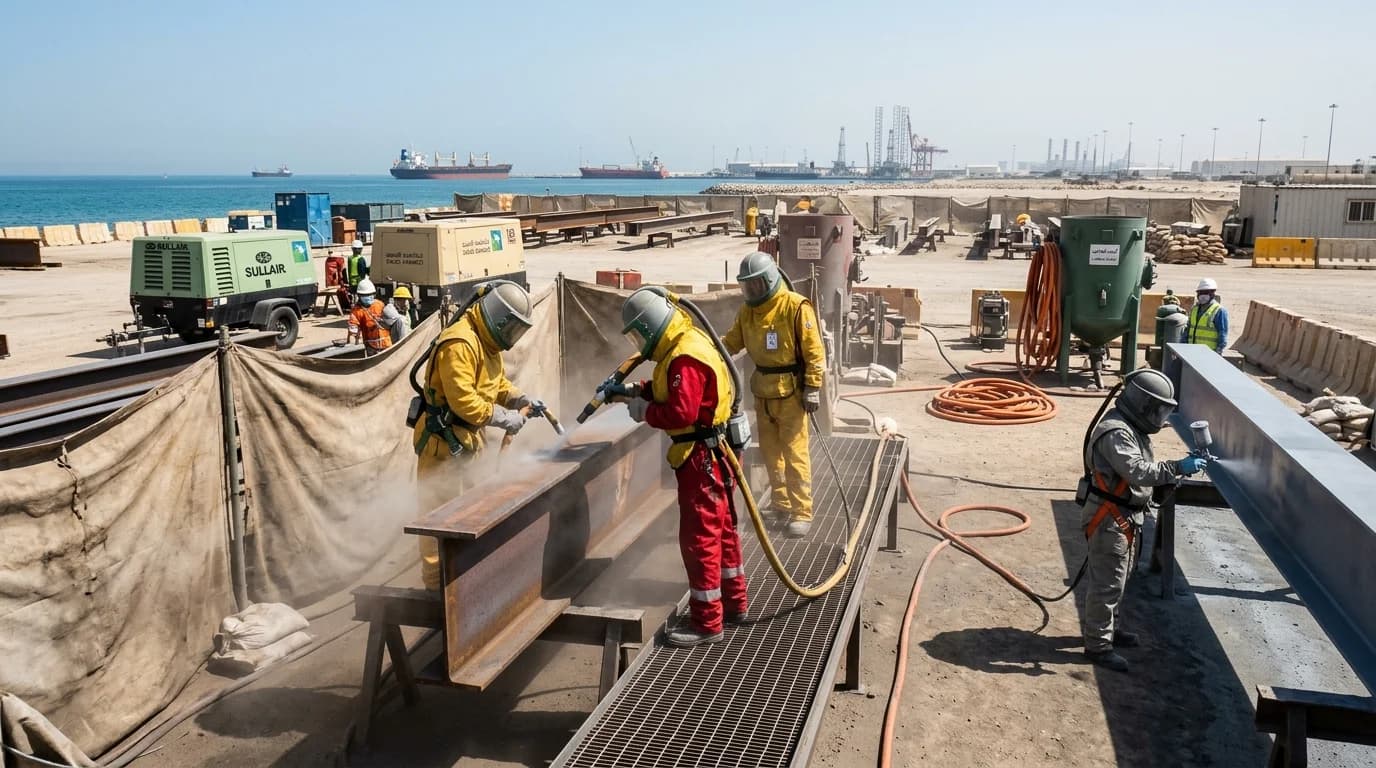
Sand Blasting and Painting Services in Tarout
Metal assets exposed to coastal air, humidity, industrial pollutants, and daily operating conditions can develop rust, peeling paint, and surface deposits over time. Before repainting or applying a protective coating, these materials often need to be removed so the metal can be properly assessed and prepared. Prime Solutions provides industrial sandblasting and painting solutions for suitable metal surfaces, based on the needs of each project.
Industrial Sand Blasting in Tarout
Sandblasting, also known as abrasive blasting, uses an abrasive material propelled against a surface to remove unwanted deposits and prepare the substrate for further work. In industrial maintenance, it is commonly used before repainting, recoating, or refurbishing compatible metal assets.
For projects in Tarout, the appropriate preparation method depends on several factors, including the extent of corrosion, the type of existing coating, surface accessibility, and the finish required for the next stage.
Prime Solutions can discuss the required work scope with project owners and contractors to help identify suitable surface preparation requirements before work begins.
Metal Surface Preparation and Cleaning Services
Different surface conditions require different preparation approaches. The objective is to remove materials that could interfere with inspection, maintenance, or the application of a new protective coating.
Rust Removal from Metal Surfaces
Rust can develop when metal is exposed to moisture and other corrosive conditions. If left untreated, corrosion may continue beneath damaged coatings and affect the condition of the substrate. Abrasive blasting can remove rust and loose surface deposits from compatible metal components. The preparation level should be determined by the severity of corrosion and the applicable project specifications.
Removal of Existing Paint and Coatings
Old paint may crack, peel, blister, or lose its protective properties over time. Applying a new coating over an unsuitable existing layer can compromise the finish. Sandblasting can help remove deteriorated or unwanted coatings from compatible surfaces, allowing the underlying material to be examined and prepared for the next treatment.
Mill Scale and Surface Deposit Removal
Mill scale, rust particles, and other surface deposits may need to be removed from steel before protective coating work. Abrasive blasting helps prepare metal surfaces to meet the cleanliness standards required for a specific project. The required surface condition should be established before work starts, particularly when a specific coating system or inspection standard applies.
Abrasive Preparation Before Repainting
A new coating requires a suitable surface to perform as intended. Surface blasting can remove unwanted deposits and establish the texture needed for the chosen coating to bond properly. The abrasive type, blasting method, and preparation level should be selected with consideration for the metal, surrounding environment, and intended coating application.
Sandblasting for Steel Structures in Tarout
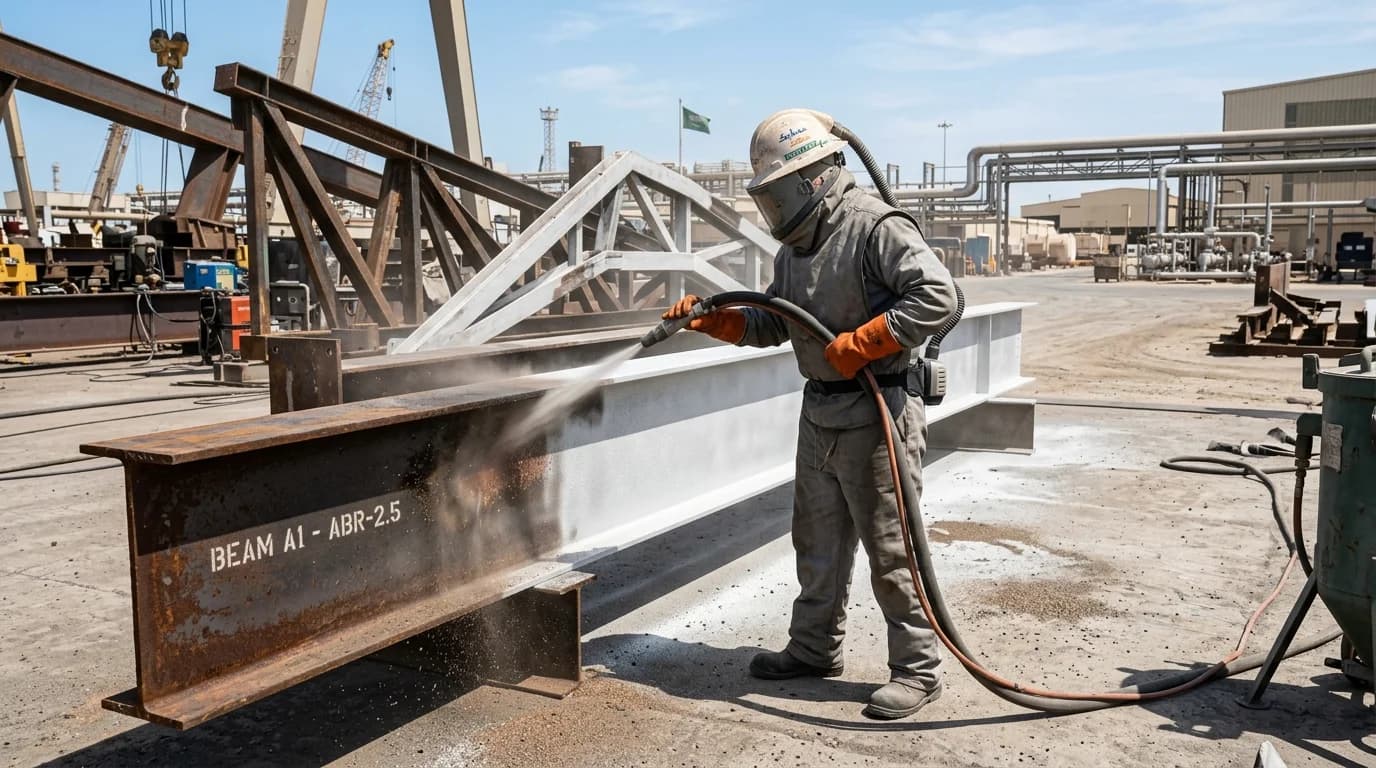
Structural steel can require surface preparation during fabrication, installation, repair, or periodic maintenance. Exposed steelwork may accumulate corrosion, old paint, and other deposits that need attention before recoating.
Potential applications include:
The preparation requirements will depend on the existing surface condition, operating environment, and protective coating specified for the structure.
Storage Tank Surface Preparation
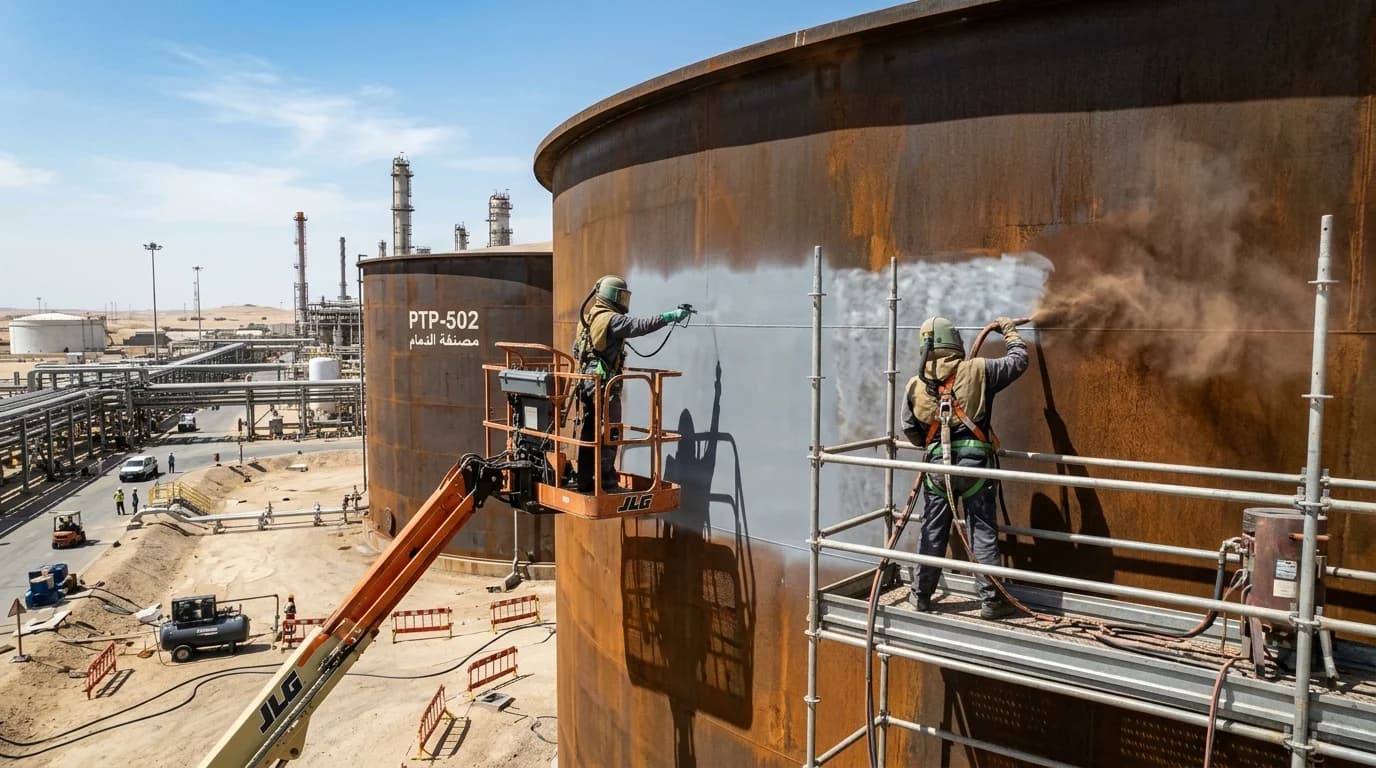
Storage tanks may need abrasive surface preparation when their coatings deteriorate or corrosion becomes visible. Preparing the surface before recoating helps address unwanted material and provides an opportunity to assess the condition of the exposed substrate.
The work may involve suitable external tank surfaces and associated metal components, depending on the agreed project scope.
Before selecting a preparation method, the tank's material, coating condition, access arrangements, operating status, and safety requirements should be evaluated. Any internal tank work requires a separate assessment of the applicable access, atmospheric, and confined-space controls.
Pipeline and Pipe Support Sandblasting
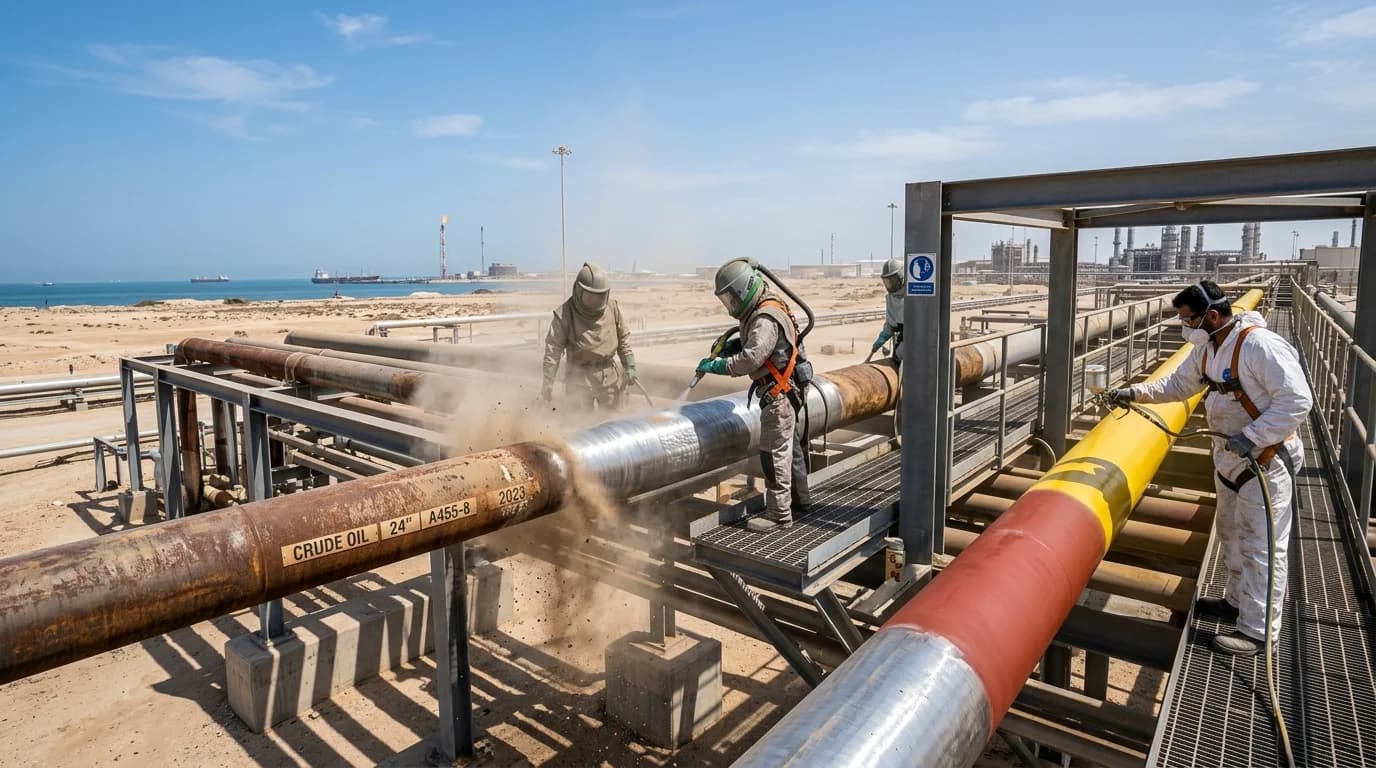
Pipelines and their supporting metalwork can be exposed to moisture, temperature changes, industrial contaminants, and other conditions that contribute to coating deterioration.
Abrasive blasting may be used to prepare compatible pipeline surfaces, pipe supports, and related steel components before maintenance painting or recoating.
The method must account for the condition of the existing coating, the accessibility of the work area, the required surface finish, and the technical specifications. The appropriate scope should be confirmed before work is scheduled.
Sandblasting for Industrial Machinery and Equipment
Machinery housings, equipment frames, and other metal components may need surface preparation before refurbishment or repainting. Removing unsuitable coatings and corrosion can help prepare these components for subsequent treatment.
Abrasive blasting is not appropriate for every part of industrial equipment, as some components may require gentler cleaning methods. Sensitive parts, seals, electrical components, precision-machined areas, and surfaces that could be damaged by abrasive impact may require masking, removal, or an alternative cleaning method.
A review of the equipment and its intended finish should therefore take place before the preparation method is selected.
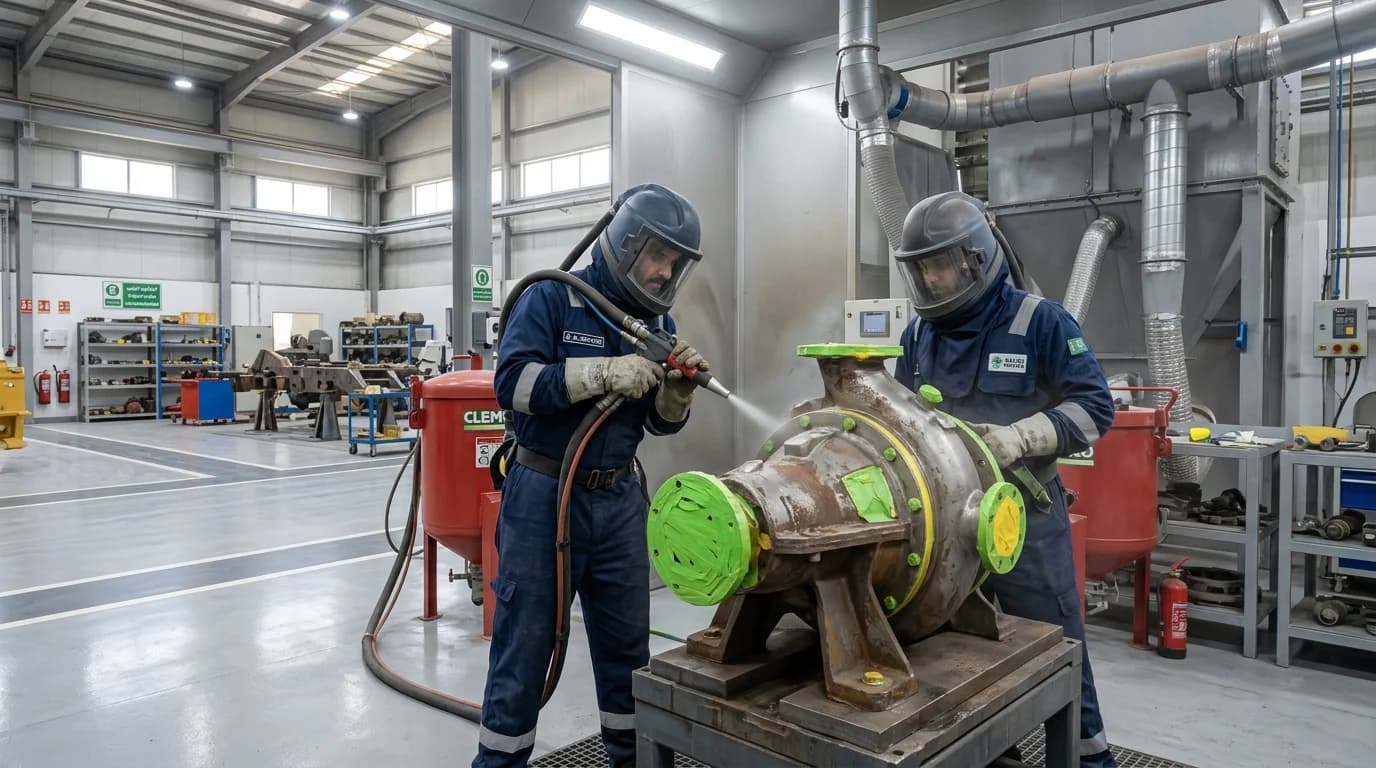
Why Is Surface Preparation Necessary Before Industrial Painting?
Protective coatings are designed to perform under specified conditions. Corrosion, flaking coatings, and manufacturing residues can weaken paint adhesion, making proper surface cleaning essential for a durable protective finish.
Suitable surface preparation can help to:
Sandblasting alone does not guarantee long-term corrosion protection. The final outcome depends on several factors, including the metal's condition, coating selection, site environment, application technique, and adherence to specified quality standards.
How the Industrial Sandblasting Process Works
The preparation sequence should be agreed before work begins so that the finished surface can be assessed against the required criteria.
1. Review the Surface Condition
Identify material, existing coating, visible corrosion, contamination, and access conditions. Establish required cleanliness grade and coating system.
2. Select the Preparation Method
Select the blasting technique and abrasive media based on substrate specifications, required surface profile, and environmental controls.
3. Prepare and Inspect the Surface
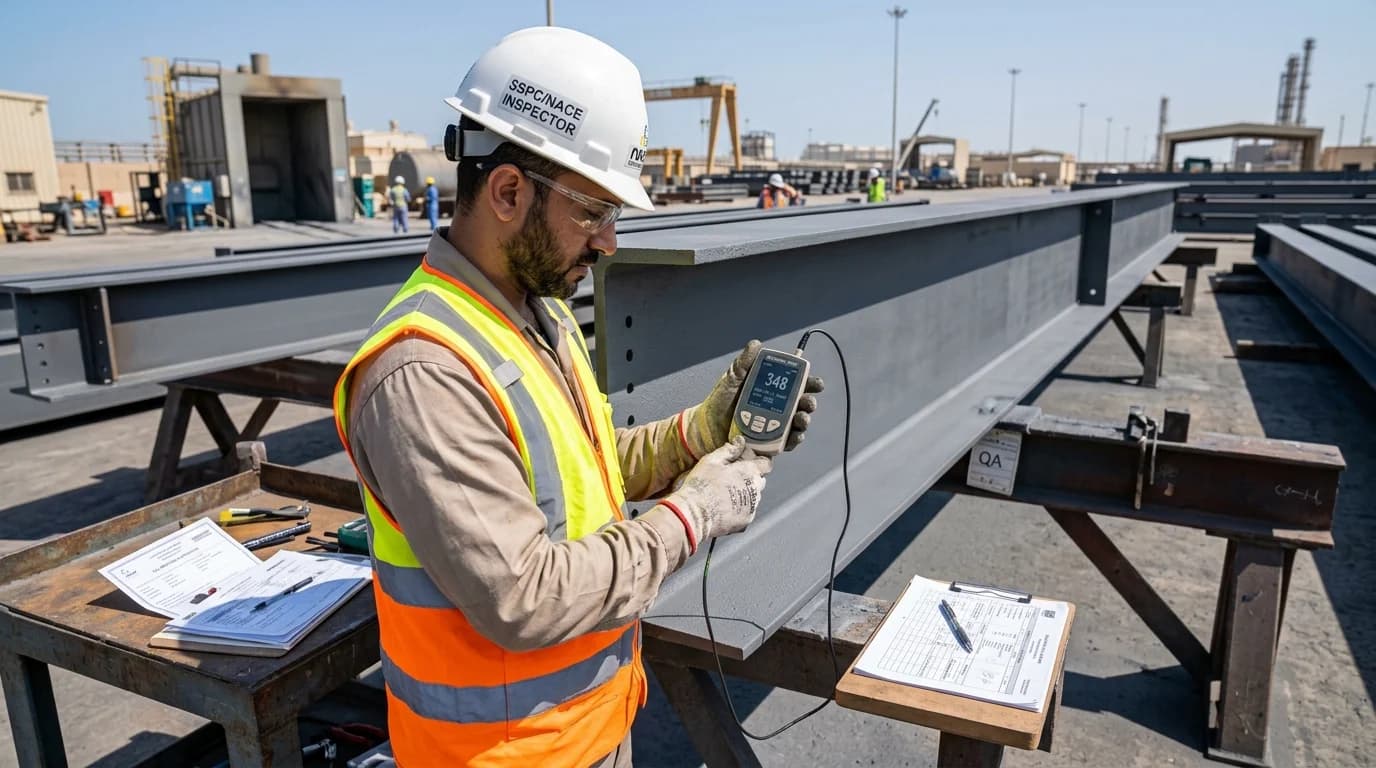
Check blasted substrate against specified cleanliness standards and surface profile. Address any remaining spots before coating proceeds.
4. Apply the Protective Coating
Apply primers and topcoats under monitored environmental conditions to prevent flash rusting and ensure manufacturer-approved adhesion.
5. Carry Out Final Quality Checks
Verify coating film thickness (DFT), check for visual defects, and ensure full adherence to project engineering specifications.
Industries Requiring Sandblasting in Tarout
Industrial surface preparation may be required across different sectors, depending on the asset type and confirmed project scope.
Oil and Gas Facilities
Suitable steel structures, pipe supports, equipment components, and other metal assets requiring surface preparation as part of maintenance or coating renewal.
Industrial & Energy Sites
Industrial facilities requiring blasting and coating work for exposed steelwork, equipment frames, support systems, and compatible metal assemblies.
Construction & Engineering
Fabricated steel sections and structural components requiring preparation before painting, installation, or refurbishment.
Manufacturing Operations
Maintenance teams requiring surface preparation for machinery housings, steel frames, and metal components before recoating or repair work.
The actual services available for a specific site should be confirmed with Prime Solutions before the project is awarded or scheduled.
Quality Considerations for Industrial Sandblasting
Effective surface preparation requires selecting a suitable treatment method based on the substrate's existing condition and the specifications of the coating to be applied.
Before work begins, the project team should establish the required cleanliness grade, surface profile, coating system, inspection method, and acceptance criteria. Environmental controls and measures to protect adjacent equipment should also be considered.
Prime Solutions approaches industrial sandblasting and painting requirements according to the agreed work scope and applicable technical specifications. Confirming these details in advance helps clarify expectations for preparation, coating, and inspection.
Planning a Sandblasting Project in Tarout
The cost and work schedule for industrial sandblasting depend on the details of the asset and the conditions at the site. A project involving lightly coated steel may require a different approach from heavily corroded equipment or components with multiple layers of old paint.
When requesting a quotation, provide as much of the following information as possible:
These details help establish the scope for assessment and quotation. Final pricing and scheduling depend on the confirmed requirements and site conditions.
Why Consider Prime Solutions for Sandblasting in Tarout?
Selecting an industrial surface preparation provider involves more than comparing prices. The work needs to reflect the substrate condition, preparation requirements, coating specifications, and practical conditions at the site.
Prime Solutions works with clients to clarify their industrial sandblasting and painting requirements for suitable metal assets. Discussing the project scope, technical documents, and expected finish at the outset helps determine the work required and the criteria against which it should be assessed.
Contractors, facility operators, engineering teams, and maintenance personnel can share their project information to discuss the suitability and scope of the required service.
Request Industrial Sandblasting Services in Tarout
Corrosion treatment and coating renewal start with understanding the condition of the surface and the preparation it requires. For industrial projects in Tarout, Saudi Arabia, Prime Solutions can discuss sandblasting and painting needs according to the asset type, project specifications, and agreed scope.
Whether the work concerns structural steel, a storage tank, pipeline supports, or compatible industrial equipment, providing accurate project details helps establish the next steps.
You've Got Questions, We'veGot Answers
Industrial sandblasting uses an abrasive propelled against a suitable surface to remove unwanted material such as rust, old coatings, and mill scale. The process prepares the substrate for inspection, refurbishment, or a specified coating application.
Get In Touch
