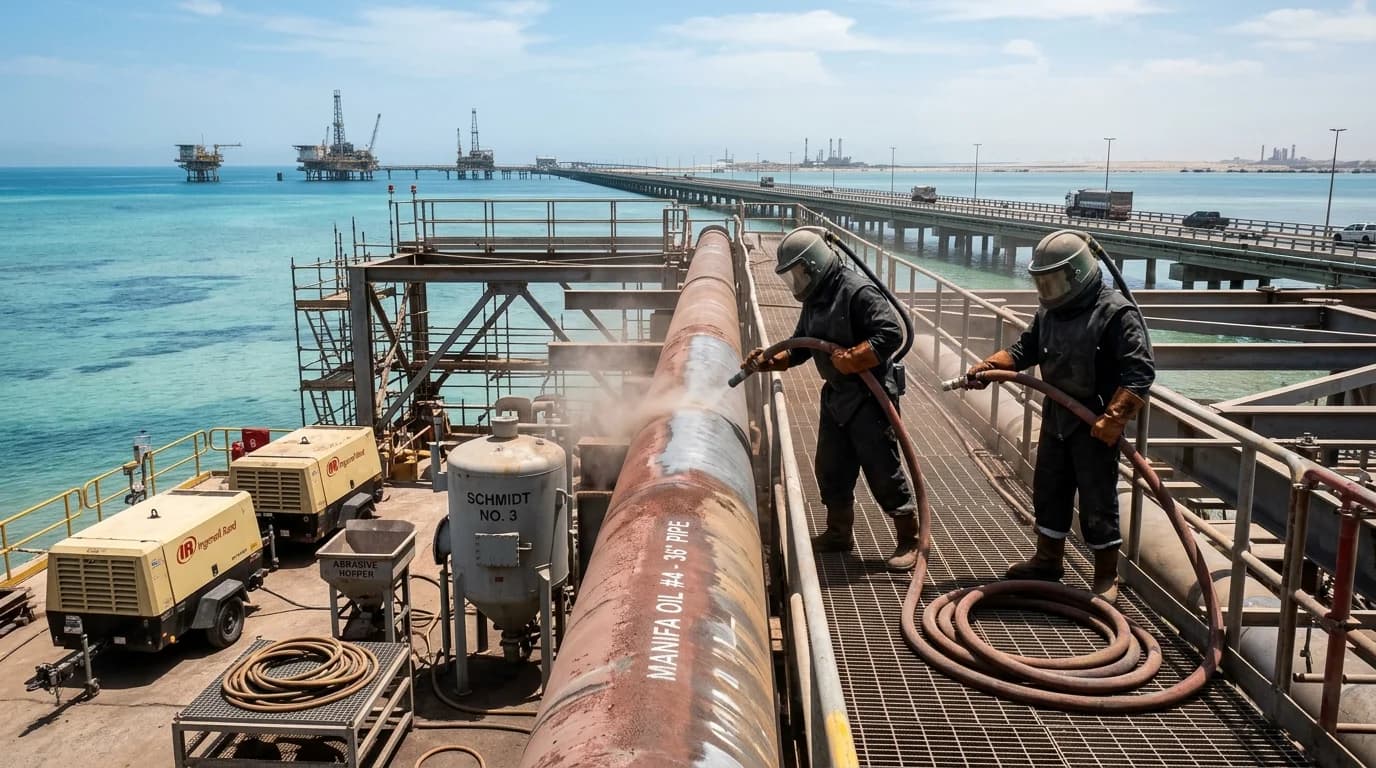
Sandblasting Services in Manifa for Industrial Surface Preparation
Prime Innovation provides industrial sandblasting and protective coating solutions in Manifa and across Saudi Arabia for steel structures, storage tanks, pipelines, valves, and industrial components, ensuring superior surface cleanliness, coating adhesion, and long-term corrosion resistance.
Why Is Sandblasting Important for Industrial Equipment?
Metal structures and industrial equipment are regularly exposed to moisture, chemicals, dust and other operating conditions. Over time, these factors can cause rust, damage existing coatings and affect the condition of metal surfaces. Proper surface preparation is therefore important before applying protective paint or coating systems.
For businesses looking for sandblasting services in Manifa, choosing the right surface treatment process helps prepare industrial components for painting, maintenance and refurbishment.
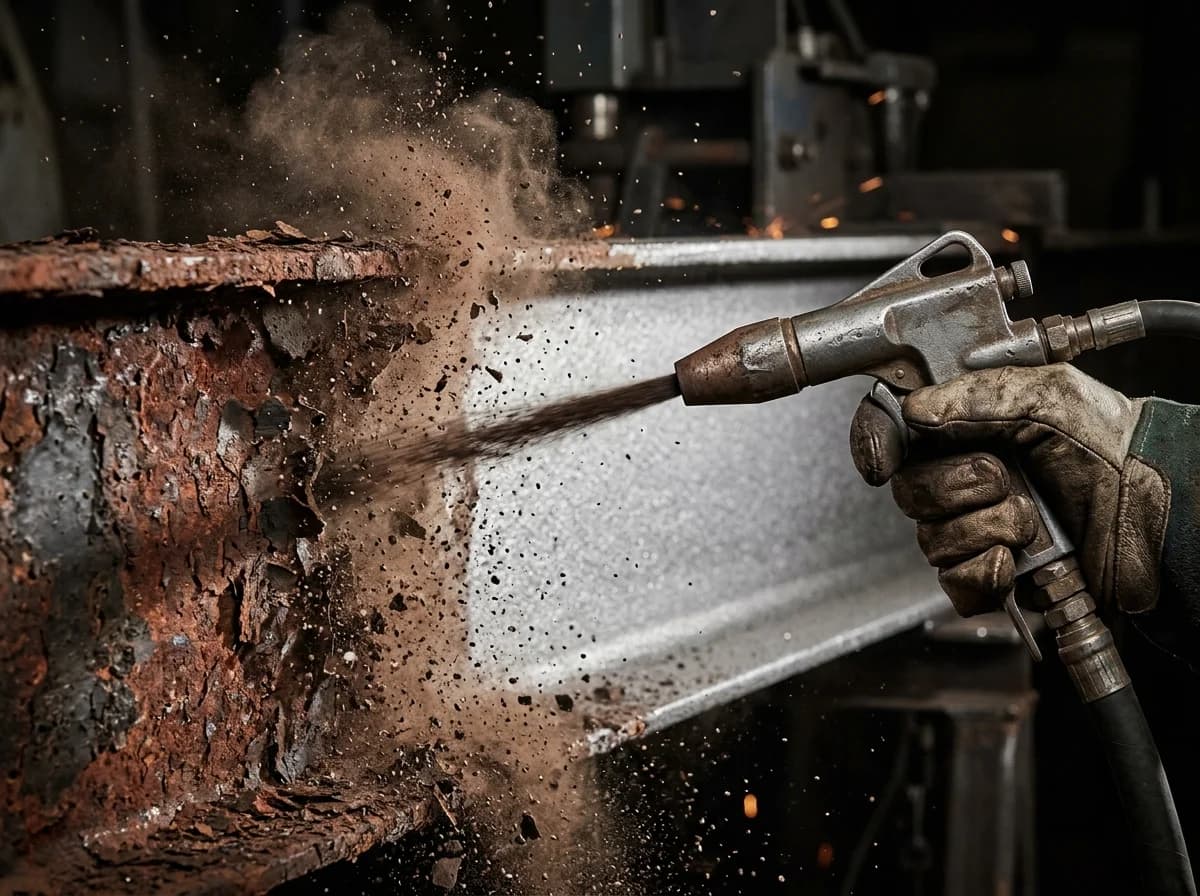
Sandblasting, also called abrasive blasting, is a surface preparation process that uses compressed air or another suitable blasting method to direct abrasive materials against a surface. This helps remove unwanted materials and prepares metal components for further treatment.
Remove Rust & Corrosion
Eliminates heavy rust, oxidation deposits, and deteriorated metal layers from industrial assets.
Clean Away Old Paint
Completely strips deteriorated paint layers and failing coatings that impair new finish adhesion.
Eliminate Mill Scale
Removes mill scale, slag, and stubborn surface contaminants to achieve pristine bare metal.
Prepare for Protective Painting
Creates an ideal, uniform base ready for multi-coat industrial protective paint systems.
Create Required Surface Profile
Develops the precise anchor profile (microns) necessary for optimum mechanical coating bonding.
Support Equipment Maintenance
Extends asset operating lifespan during routine overhauls, shut-downs, and refurbishment projects.
The level of cleaning required depends on the existing surface condition and the coating system planned for the component. Proper preparation helps reduce coating problems caused by rust, dirt or other remaining contaminants.
Industrial Sandblasting Applications in Manifa
Industrial components have different surface preparation requirements. The suitable blasting method depends on the material, existing surface condition and intended use of the equipment.
Steel Structures
Steel structures in industrial facilities need proper surface preparation before painting. Sandblasting helps remove rust, old paint and mill scale, leaving the surface ready for the specified protective coating.
Storage Tanks
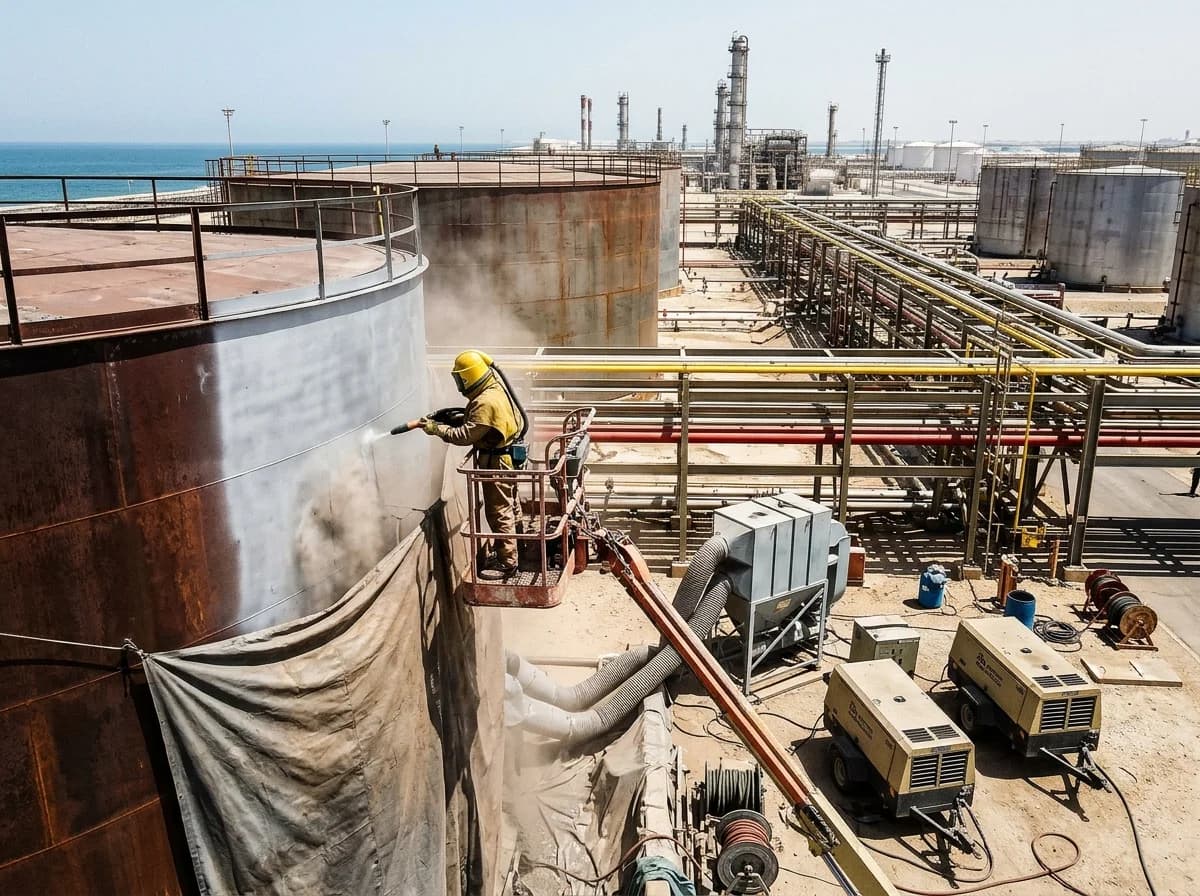
Storage tanks can develop rust and coating damage due to environmental exposure and operating conditions. Abrasive blasting helps remove deteriorated coatings and prepares the metal surface for maintenance or a new protective coating.
Pipelines and Pipe Sections
Pipelines and related components require suitable cleaning before protective coating application. Removing rust, loose paint and other unwanted materials helps prepare the surface for the selected coating system.
Industrial Valves
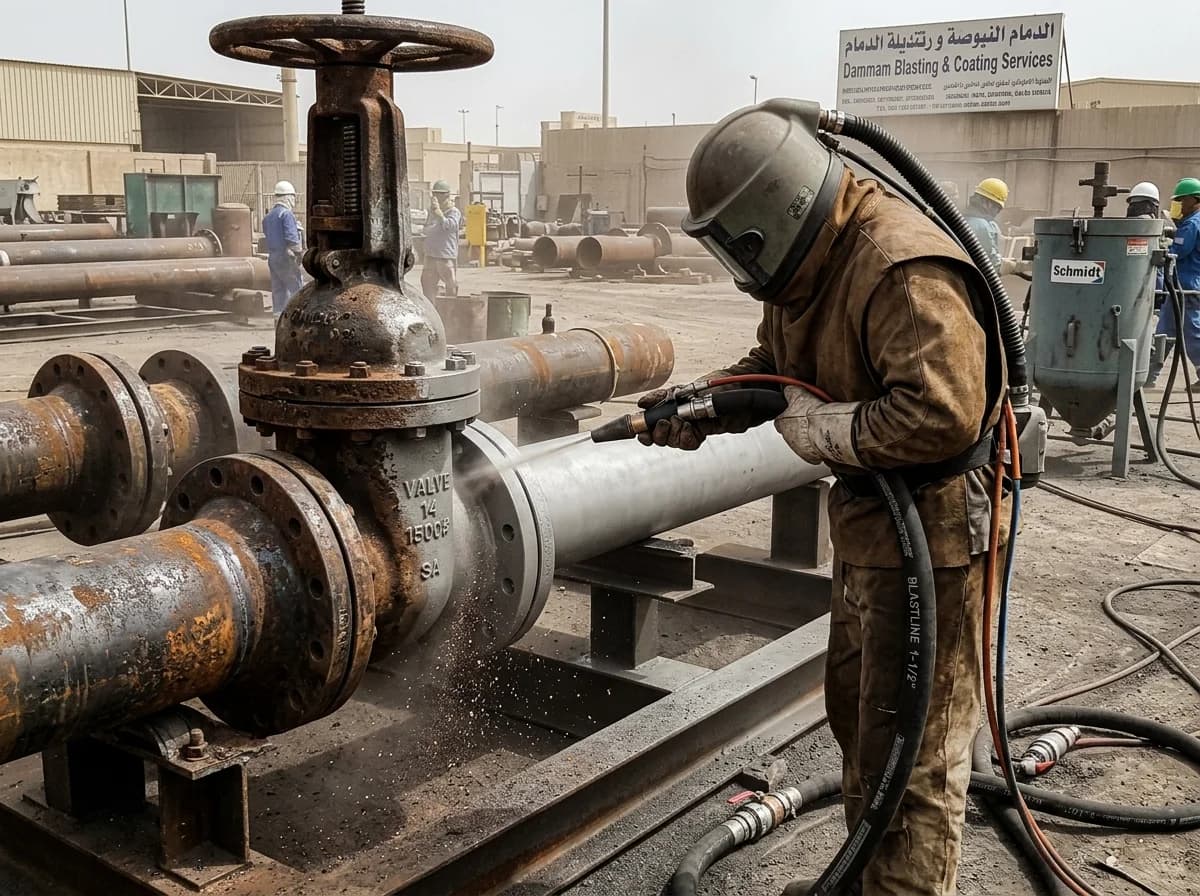
Industrial valves may experience different operating conditions depending on their application. Surface cleaning and coating restoration help maintain their external protection. Prime Innovation also supports valve reconditioning through cleaning, blasting, coating application and finish restoration.
Fabricated Components and Industrial Equipment
Fabricated metal parts, compressor-related components and other industrial equipment may need surface preparation before painting or refurbishment. The blasting method should be selected according to the component material, surface condition and project requirements.
Surface Preparation Before Protective Coating
The condition of a metal surface has a direct impact on how well a protective coating performs. Applying paint over rust, grease, loose paint or other contaminants can affect coating adhesion and reduce its protective value.
Before starting abrasive blasting, the surface condition and coating requirements should be reviewed. This helps determine how the metal needs to be cleaned and what surface profile is required before painting.
Following the project specifications and coating manufacturer's recommendations helps ensure that the surface is prepared correctly for the intended application.
Choosing Suitable Abrasive Materials
The abrasive material used during blasting affects how the surface is cleaned and finished. Different materials have different properties, so the selection should depend on the metal surface, existing coating, required cleaning level and project specifications. Industrial blasting commonly uses:
Garnet
A natural mineral abrasive ideal for removing surface contaminants and preparing metal surfaces for high-performance coatings with low dust.
Steel Grit
A hard, angular abrasive used in industrial metal-cleaning operations where a deep, sharp anchor surface profile is required.
Steel Shot
A spherical, rounded metallic abrasive commonly used for surface cleaning, descaling, and peening in heavy fabrication.
Copper Slag
A cost-effective synthetic abrasive material commonly used in industrial blasting operations for removing thick rust and old coatings.
Glass Beads
Used for specialized cleaning, satin finishing, and decontaminating stainless steel and delicate surfaces without surface damage.
Not every abrasive is suitable for every surface. Its hardness, shape and compatibility with the material should be considered before selection. The required preparation results, working conditions and safety requirements should also be taken into account.
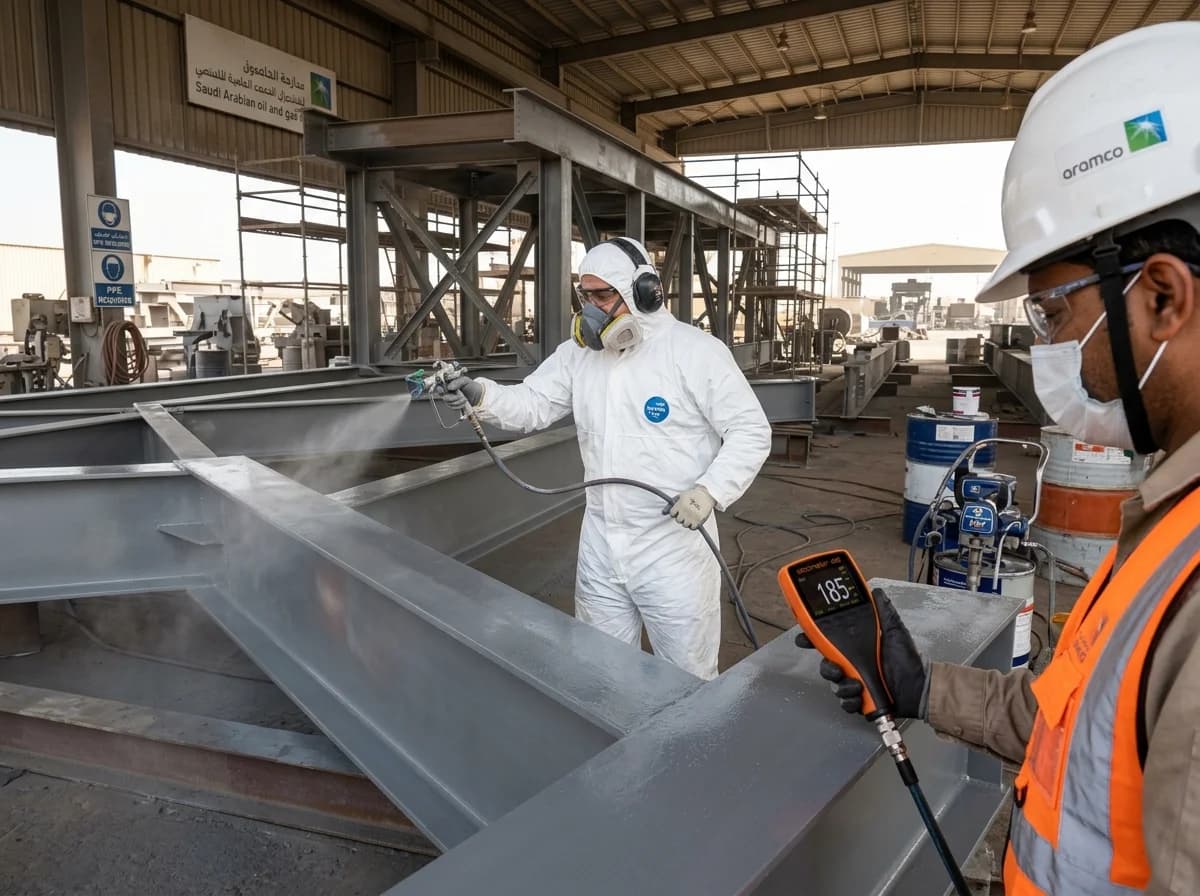
Industrial Painting and Protective Coating After Sandblasting
Sandblasting prepares the metal surface for painting, but the coating process is equally important. Once the required surface condition is achieved, protective coatings can be applied according to the project specification.
Primer Application
Forms the initial coating layer on a prepared surface, promoting adhesion and providing initial corrosion resistance.
Intermediate Coating
Applied between primer and final coat to build required film thickness and provide extra chemical barrier.
Topcoat Application
The final layer providing the aesthetic finish, UV resistance, and environmental barrier protection.
Drying and Curing
Allowing each coating layer sufficient time to dry or cure according to product guidelines and climate conditions.
Coating Inspection
Assessing visual appearance, coverage, and verifying Dry Film Thickness (DFT) against technical specs.
How the Sandblasting and Painting Process Works
A planned workflow helps maintain consistency throughout surface preparation and coating work. The exact steps may vary depending on the component, its condition and the project specification:
Component Assessment
Examine the metal components and review their surface condition, preparation needs and coating requirements.
Initial Cleaning
Remove oil, grease, loose dirt and other contaminants before starting the blasting process.
Abrasive Blasting
Use a suitable abrasive material and blasting method to remove rust, old coatings and mill scale.
Surface Inspection
Check whether the prepared surface meets the required cleanliness and surface profile.
Primer & Coating
Apply the specified primer and protective coating layers according to the approved coating system.
Drying and Curing
Allow each coating layer to dry or cure under the conditions recommended for the product.
Final Quality Checks
Carry out the required visual checks and coating thickness measurements (DFT).
Labelling & Dispatch
Complete relevant identification, documentation and delivery arrangements according to scope.
Factors to Consider When Selecting a Sandblasting Service Provider
Choosing a suitable sandblasting service provider involves more than comparing prices. Businesses should consider the provider's understanding of industrial surface preparation and its ability to meet the project's technical requirements:
Technical Understanding
Ability to assess the surface condition and understand project specifications.
Abrasive Selection
Choosing a suitable blasting material for the metal and application.
Surface Preparation Quality
Preparing the surface to meet the required cleanliness and profile.
Coating Application
Understanding the requirements for primer, intermediate coats and topcoats.
Inspection Support
Providing relevant visual checks and coating thickness measurements as required.
Project Coordination
Clear communication about work stages, inspection and delivery arrangements.
Safety Practices
Appropriate dust controls, equipment, worker training and personal protective measures.
Considering these factors helps procurement and project teams assess whether a service provider can meet their industrial surface preparation requirements.
Why Consider Prime Innovation for Sandblasting Requirements?
Prime Innovation provides industrial sandblasting and painting solutions in Saudi Arabia for steel structures, storage tanks, pipelines, valves, fabricated components and industrial equipment.
Its service scope includes surface cleaning, abrasive blasting, protective coating application, valve reconditioning and inspection support.
Businesses can review the company's industrial sandblasting and painting capabilities to understand its service scope and available solutions.
Surface Preparation
Removing rust, mill scale, old coatings and other unwanted materials from metal surfaces.
Industrial Coating
Applying primer and protective coating layers according to project requirements.
Valve Reconditioning
Cleaning, blasting, coating touch-ups and finishing restoration for high-pressure valves.
Quality Verification
Supporting visual checks, Dry Film Thickness (DFT) measurements and surface profile inspections.
Project Coordination
Coordinating component handling, inspection stages, documentation and dispatch according to the agreed scope.
Regional Logistics
Dedicated logistics coordination directly to facilities and worksites across Manifa.
For businesses with equipment or project requirements in Manifa, service availability, work location, transportation arrangements and the required scope should be confirmed directly with the Prime Innovation team.
Contact Prime Innovation for Sandblasting Services in Manifa
Proper surface preparation helps maintain industrial equipment and protect metal structures against corrosion. Selecting suitable blasting materials and coating systems allows businesses to address the specific needs of their equipment.
If your company requires sandblasting, surface cleaning, valve reconditioning or protective coating support for a project in Manifa, contact Prime Innovation to discuss your requirements. Sharing details such as the component type, surface condition, required preparation level, coating specification and project location can help the team understand the work involved.
Frequently Asked Questions
Sandblasting removes rust, old paint, mill scale and other unwanted materials from metal surfaces. It also prepares components for protective painting and coating applications.
Get In Touch
