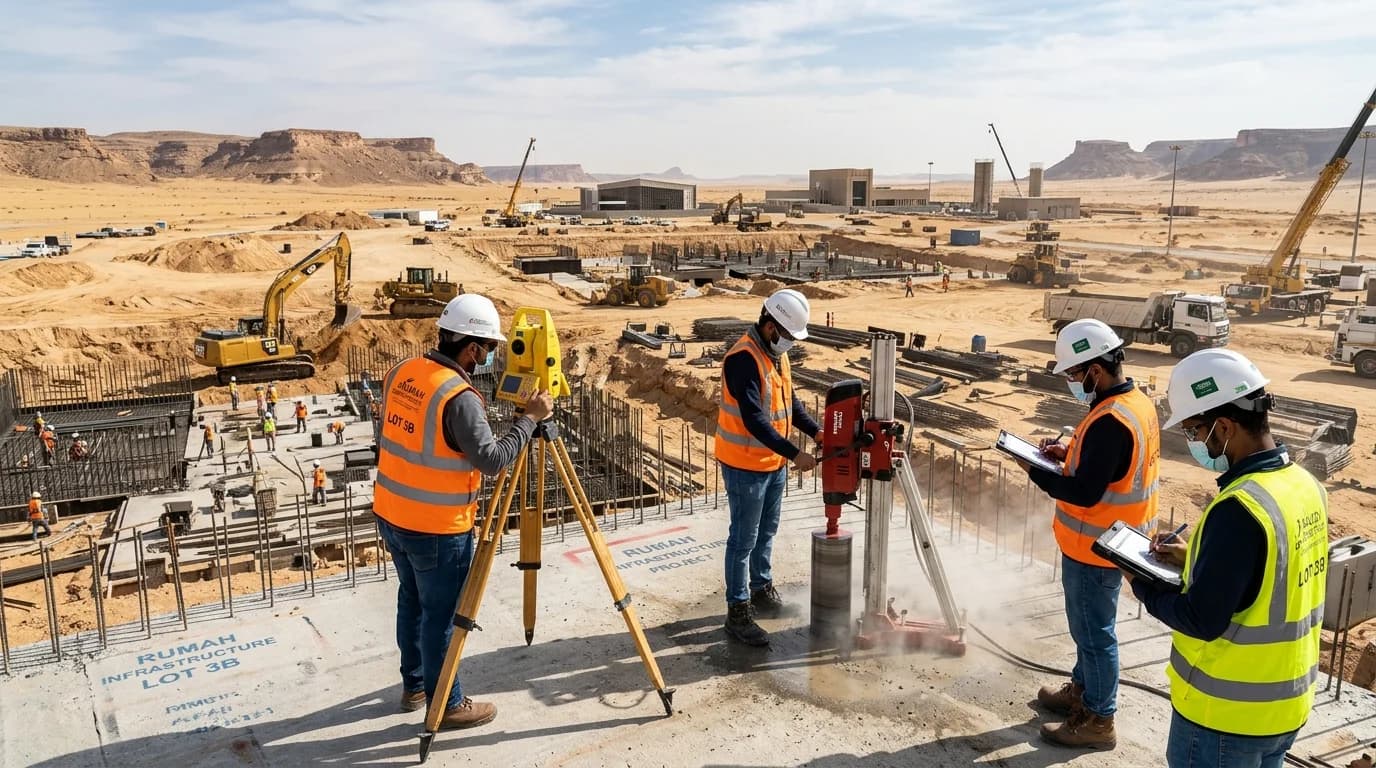
Civil Testing Services in Rumah for Construction Quality Control
Prime Innovation provides comprehensive civil testing services in Rumah, Saudi Arabia, including soil, concrete, field, and construction material testing to support construction quality assurance, material assessment, and engineering compliance.
How Does Civil Testing Support Construction Quality?
Every construction project begins with decisions about the ground, structural requirements and materials. Soil and material testing provide engineers with technical information to evaluate these factors before work begins and as construction progresses. These assessments help identify conditions that may require attention before they affect the quality or stability of the finished structure.
For contractors, developers and project teams looking for Civil Testing Services in Rumah, selecting suitable testing methods is an important part of project planning. Different assessments are used to examine soil behaviour, concrete properties and the quality of materials used in construction.
Civil testing examines the properties of construction materials and ground conditions against the technical requirements of a project. It gives engineers measurable information that can be used to review material suitability and identify possible deviations from specified requirements.
Key Benefits of Civil Testing for Project Teams:
A suitable testing plan should reflect the project specifications, site investigation findings and intended use of each material. This helps ensure that the tests provide information relevant to the work being undertaken.
Soil Testing Services in Rumah
The characteristics of soil can influence foundation design, road construction and other ground-related activities. Its response to water, pressure and compaction varies according to its composition and condition. Soil testing helps engineers examine these characteristics and understand the ground before construction work moves forward.
Engineering teams evaluate subgrade stability and foundation conditions based on targeted technical assessments that accurately reflect the site's geology.
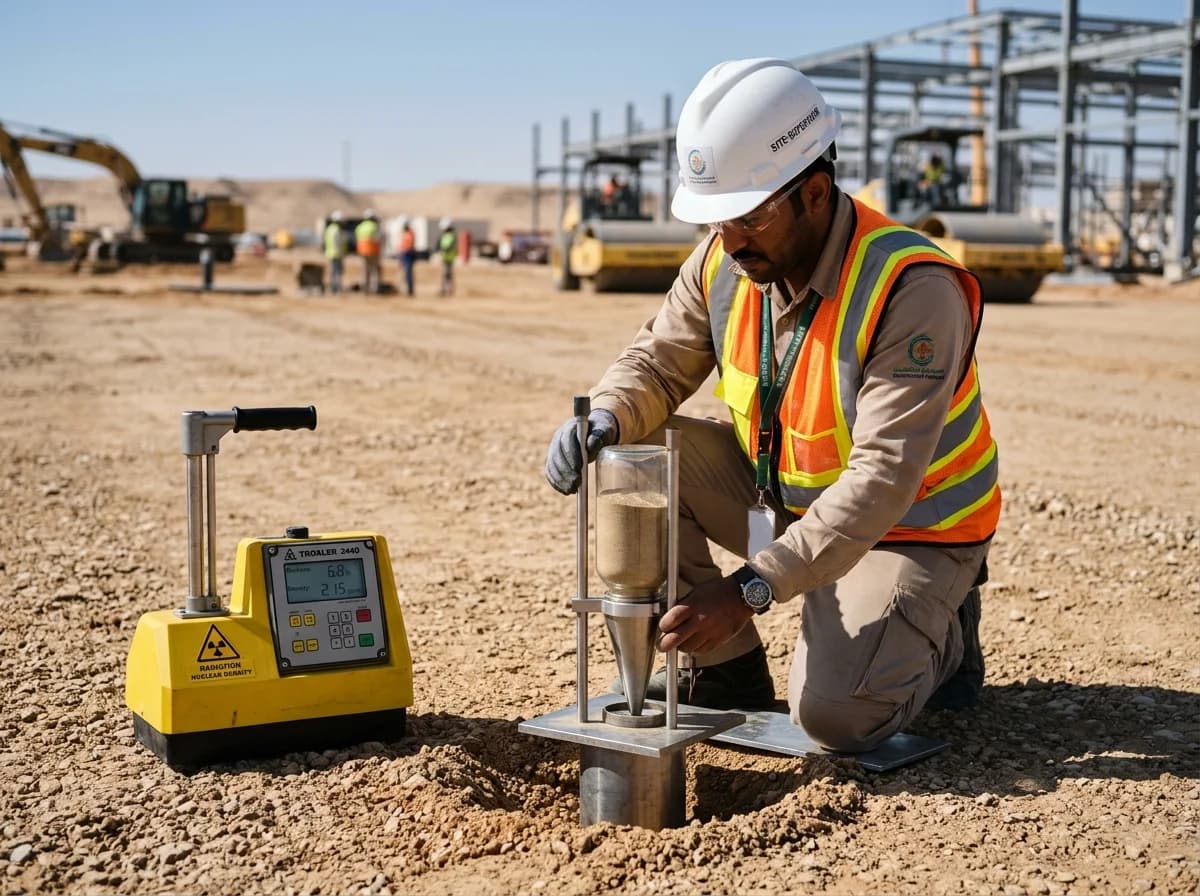
Moisture Content Testing
The test identifies the amount of moisture contained in a soil specimen. The measurement is useful when evaluating soil conditions for earthwork and compaction, as changes in moisture can influence how soil behaves during these activities.
Soil Classification Testing
This assessment analyses soil composition and the distribution of particles within the sample. The test findings help establish its classification and provide information about its potential use in construction applications.
Atterberg Limits Testing
This assessment examines the consistency of fine-grained soil at different moisture levels. It establishes limits that help describe how the soil changes between liquid, plastic and solid states. These results are useful when studying soil behaviour and suitability.
Soil Compaction Testing
Soil compaction testing examines the density that can be achieved under specified moisture conditions. The results help establish suitable compaction requirements for earthwork, filling and site preparation.
California Bearing Ratio (CBR) Testing
CBR testing measures the resistance of a soil sample to penetration under a controlled load. It is commonly used to assess subgrade strength when evaluating materials for road and pavement construction.
Soil Bearing Capacity Testing
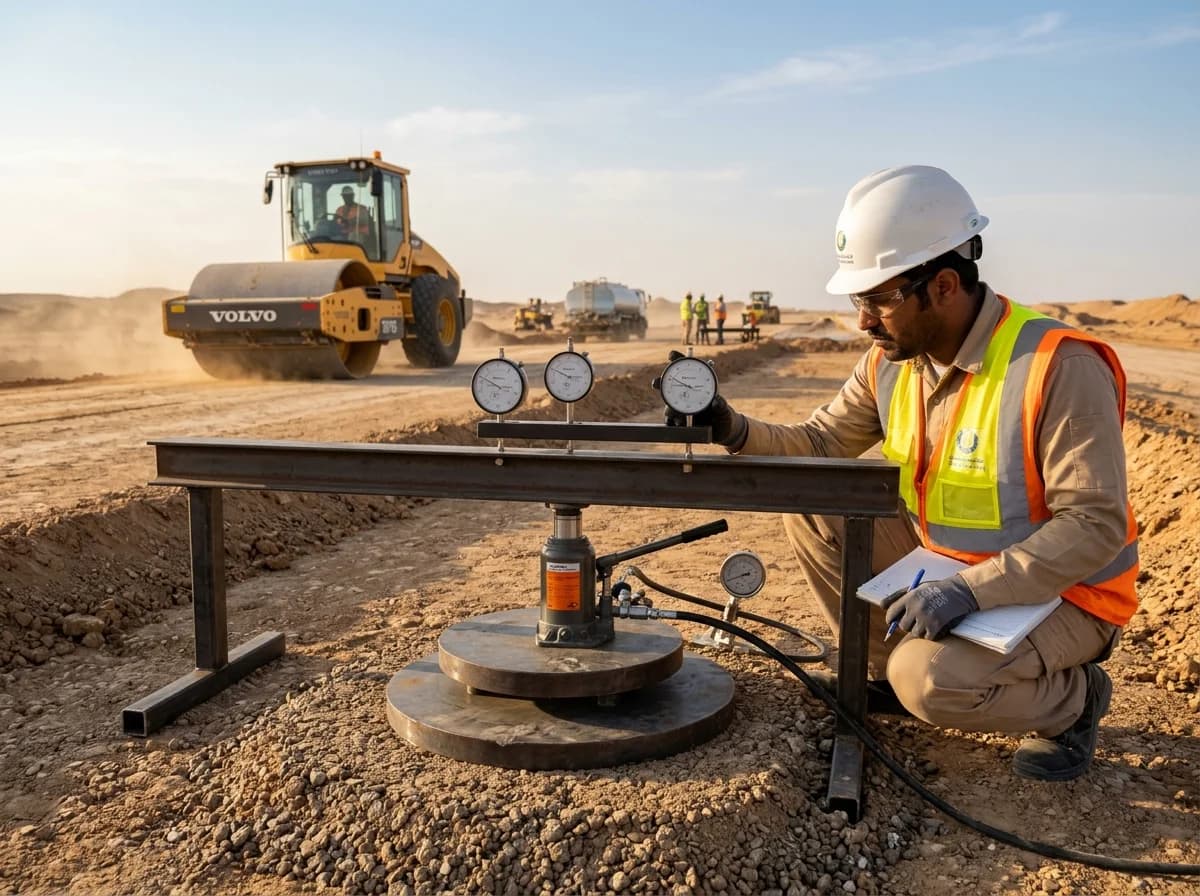
This assessment examines the ground's ability to withstand loads from structures. The findings contribute to engineering evaluations of foundation support and help determine whether further ground investigation is necessary.
A clear understanding of soil and concrete testing requirements helps construction teams identify suitable assessments for their projects. Soil test findings can inform decisions about foundation preparation, earthwork and pavement support. Engineers should determine the testing scope based on site conditions and the applicable project specifications.
Concrete Testing Services in Rumah
Concrete is an essential material in many construction applications, including foundations, buildings, roads and industrial structures. Its properties are influenced by the mix composition, material quality, placement and curing process. Testing allows project teams to examine fresh and hardened concrete and compare the findings with the required specifications.
Depending on the application, comprehensive concrete assessments cover workability, compressive strength development, and long-term durability metrics.
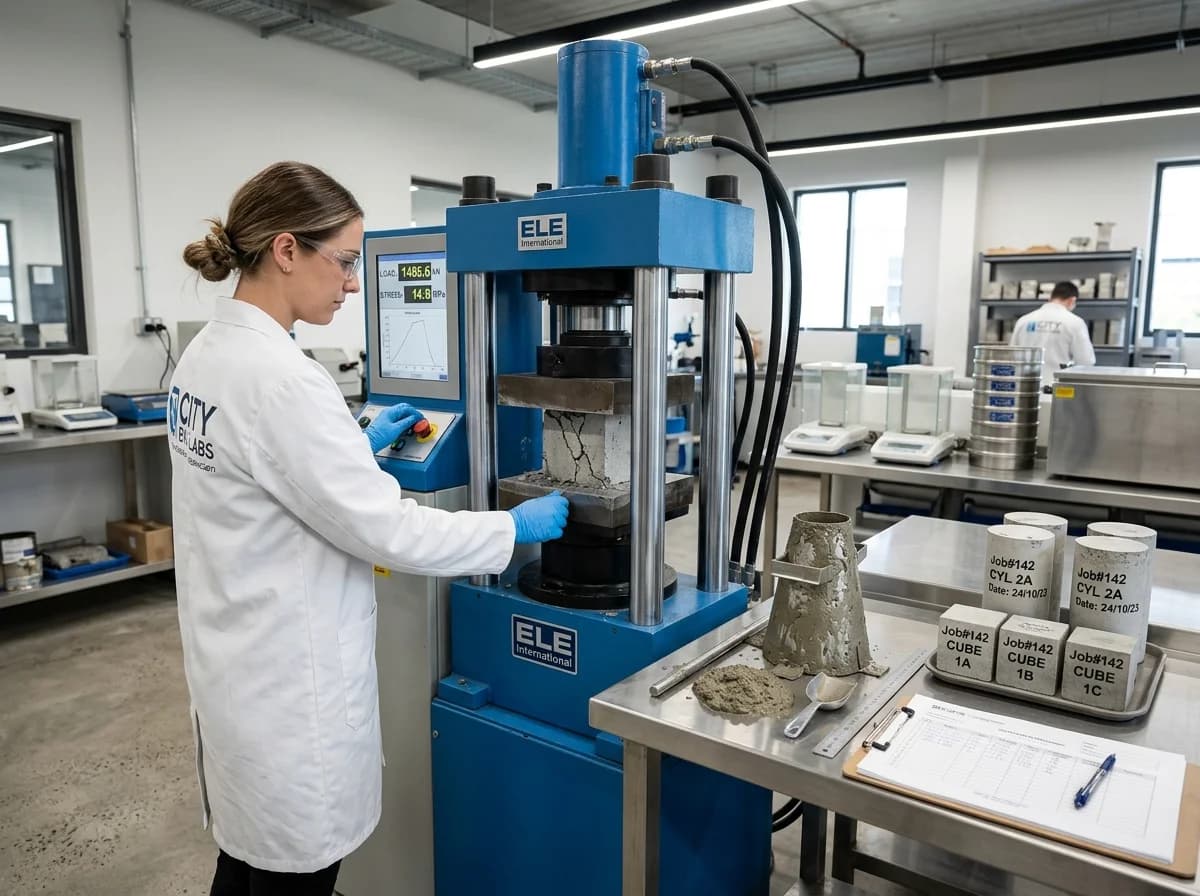
Concrete Slump Testing
A slump test examines the workability of fresh concrete by measuring how much it settles after being placed in a standard test cone. The result helps assess whether the mix has the required consistency for the planned placement activity.
Concrete Cube Testing
Concrete specimens are subjected to compression tests after curing to assess their strength. The test results help determine whether the concrete has developed the strength required by the project.
Compressive Strength Testing
This test determines the maximum compressive stress a concrete specimen can withstand before failure. Engineers use the results to compare concrete performance with the strength criteria stated in the project specifications.
Concrete Density Testing
Concrete density testing establishes the mass of a concrete sample in relation to its volume. This measurement provides information about the material's density and can help identify variations between samples.
Water Absorption Testing
This assessment determines how much water a hardened concrete specimen absorbs under specified conditions. The findings provide information about water absorption characteristics, which may be considered when evaluating concrete durability.
Air Content Testing
Air content testing measures the proportion of air present in a fresh concrete mix. The result helps verify whether the mix meets the specified air content requirements for its intended application.
Fresh and Hardened Concrete Evaluation
Concrete properties are examined at different points in the construction process. Fresh concrete testing focuses on characteristics such as workability and air content, while hardened concrete assessments examine properties such as strength, density and water absorption. Together, these checks provide a broader view of concrete quality.
Field Testing for Construction Site Verification
Not every construction quality check takes place in a laboratory. Field testing involves examining materials or carrying out measurements at the project location. It provides information about actual site conditions and helps verify whether completed activities meet the required criteria.
These checks are useful when a construction activity needs to be evaluated before the next operation begins. For instance, checking the density of a compacted layer can help identify areas that may need additional work before further filling or construction proceeds.
Construction Material Testing Services
Materials used in buildings, roads and infrastructure must be appropriate for their intended purpose. Their properties can affect construction quality and the performance of the completed work. Material testing helps determine whether selected materials satisfy the requirements established for a particular application.
Aggregate Testing
Aggregates form part of concrete mixes and are also used in road construction and other civil engineering work. Testing examines relevant physical properties to help determine whether the material is suitable for its specified application.
Soil and Backfill Material Testing
Materials used for filling and ground preparation need to be assessed before use. Testing provides information about their composition and physical properties, helping engineers evaluate their suitability for the planned work.
Concrete Material Testing
The properties of concrete depend on the materials used in its preparation. Appropriate testing helps assess relevant material characteristics and determine whether they align with the specified requirements for the concrete application.
Road Construction Material Testing
Road projects involve materials used in subgrade, sub-base, base and pavement layers. Testing helps evaluate the properties of these materials and their suitability for the intended construction purpose.
Structural Construction Component Testing
Certain construction components and materials may require examination to verify specific performance or quality requirements. The appropriate assessment depends on the component, its intended function and the technical criteria established for the project.
At Which Stages Is Civil Testing Required?
Testing requirements should be considered throughout the construction schedule rather than only after work has been completed. The appropriate assessment depends on the activity being carried out and the quality checks specified for that stage.
The required tests, testing frequency and acceptance limits should be established by the responsible engineering team in accordance with project specifications and the applicable quality plan.
Construction Quality Concerns That Civil Testing Can Help Identify
Variations in soil conditions, material properties and construction practices can affect the quality of completed work. Some concerns may not be immediately visible, making appropriate testing an important part of construction inspection and quality management.
Test findings give engineers a basis for examining these concerns and deciding whether additional investigation or corrective measures are necessary. Recognising common construction quality concerns also helps project teams understand the value of checking materials and site conditions at appropriate stages. Reviewing test results before proceeding with subsequent activities can help prevent identified issues from being carried forward into later construction work.
Why Consider Prime Innovation for Civil Testing Services in Rumah?
Prime Innovation provides civil testing services in Saudi Arabia, with testing capabilities covering soil, concrete, field activities and construction materials. These services are relevant to construction and infrastructure projects that require material assessment and technical quality checks.
Soil Testing
Moisture content, soil classification, Atterberg limits, compaction, field density, CBR and soil bearing capacity testing.
Concrete Testing
Slump, cube, compressive strength, density, water absorption and air content testing.
Field Testing
Soil and concrete sampling, field density checks, compaction verification and on-site material testing.
Material Testing
Assessment of aggregates, backfill materials, concrete materials, road construction materials and structural components.
The appropriate testing scope depends on the project type, materials and technical specifications. Project teams can discuss their requirements with Prime Innovation to identify the relevant testing services.
For construction projects in Rumah, businesses should contact the team to confirm location-specific service availability, testing requirements and arrangements for any site-based work.
Frequently Asked Questions
You've Got Questions, We'veGot Answers
Common civil testing categories include soil assessment, concrete evaluation, field density checks and construction material testing. The selection of tests depends on the project requirements and the materials being used.
Contact Prime Innovation for Civil Testing Services in Rumah
Accurate testing results give construction teams useful information about ground conditions, concrete properties and the suitability of building materials. Including appropriate assessments in the project quality plan can support informed engineering decisions from site preparation through material verification.
If your organisation is planning construction or infrastructure work in Rumah and requires civil testing support, contact Prime Innovation to discuss the project requirements. When making an enquiry, provide details about the project location, type of construction, materials involved and the tests under consideration.
Project-Specific Scope
Tailored testing parameters matching your site ground conditions, construction schedule, and municipal specifications.
Certified Verification
Laboratory and in-situ field testing conducted in strict alignment with ASTM, BS, and Saudi Building Code standards.
Engineering Confidence
Audit-ready test reports and documented verification that support consultant sign-offs and reliable foundation execution.
Connect with Our Civil Testing Engineers in Rumah
Speak directly with our technical team to schedule soil testing, concrete compressive checks, field density assessments, or material testing for your project in Rumah.
